

ℹ️ 🛹 Web Média Skate 🛹 ℹ️

★ Spots
Lisbon, marble everywhere and nobody there to kick you out: 29 million tourists later, does it still hold up?
Huit places, une pierre qui n'est pas du marbre, et une fenêtre horaire précise : ce que Lisbonne vaut encore pour un skateur en 2026.
Huit places, une pierre qui n'est pas du marbre, et une fenêtre horaire précise : ce que Lisbonne vaut encore pour un skateur en 2026.
For fifteen years, Lisbon got passed around by word of mouth as the last place in Europe where nobody bothered you. Marble from the ground to the rooftops, entire plazas cut out of the same stone, and nobody coming over to tell you to get lost. Since then, Portugal has gone from 16.4 to 29 million foreign visitors a year. The question needs asking a different way.
We went back through the city plaza by plaza: what’s still standing, what’s changed hands, and what time of day it’s still worth the trip. The straight answer is at the bottom of the page, and it’s not the one you read everywhere else.
⏱ Read: 11 min
What you call marble isn’t marble
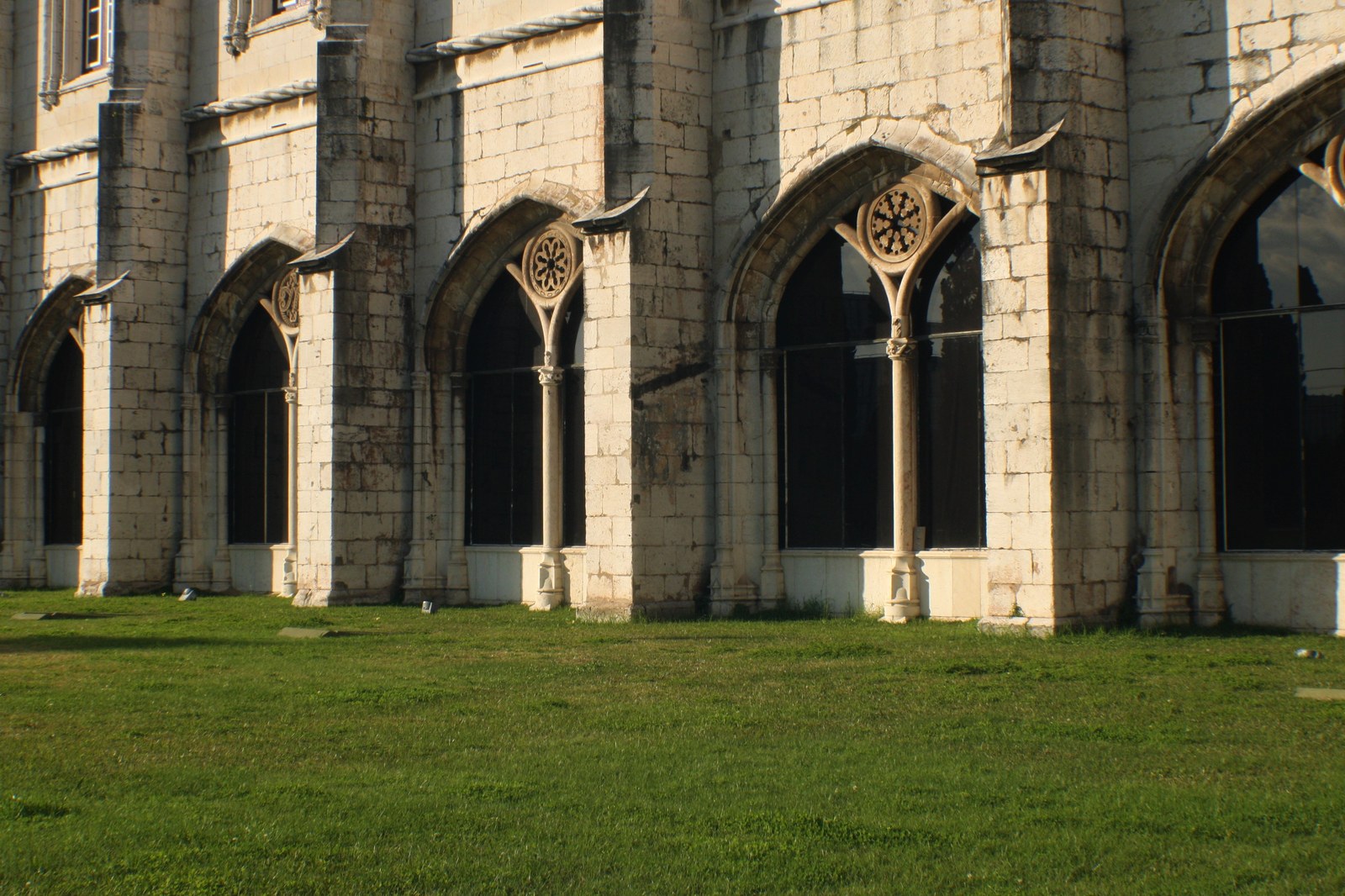
The stone that covers Lisbon has a name, and it isn’t marble. It’s lioz: a compact limestone formed in the Cretaceous, quarried around Pero Pinheiro, some thirty kilometers northwest of the city. The Jerónimos is lioz. So is the Torre de Belém. Rossio station, the convent at Mafra, half the stairs you set your tail on.
Two numbers explain all the rest. This limestone takes 1,050 kg/cm² in compression and soaks up only 0.1% of its weight in water. Translation for us: stone that doesn’t drink doesn’t crumble, it polishes. Every sole, every wheel, every downpour makes it a little slicker instead of eating it away. The exact opposite of the concrete on a French plaza, which ages by cracking open.
The Independent crew, over there filming in 2025, sums it up in one word: slick. The walls slide on their own. You set down, you go. No wax needed on half the ledges in the Baixa, which, when you’ve just spent a whole winter waxing granite, feels strange for the first three minutes.
That leaves one question: why so much identical stone over so many kilometers? Because the city was rebuilt in one shot. The 1755 earthquake flattened the center, and the Marquis of Pombal rebuilt the Baixa on a grid, with standards imposed on everyone. Scale models of those buildings were tested by marching troops around them, to simulate the shaking. The result: a whole district built off the same spec sheet, same slabs, same stairs, same ledge height, across dozens of streets. Nobody drew that up for us. It just happens to work out perfectly.
The 8 plazas that built the reputation
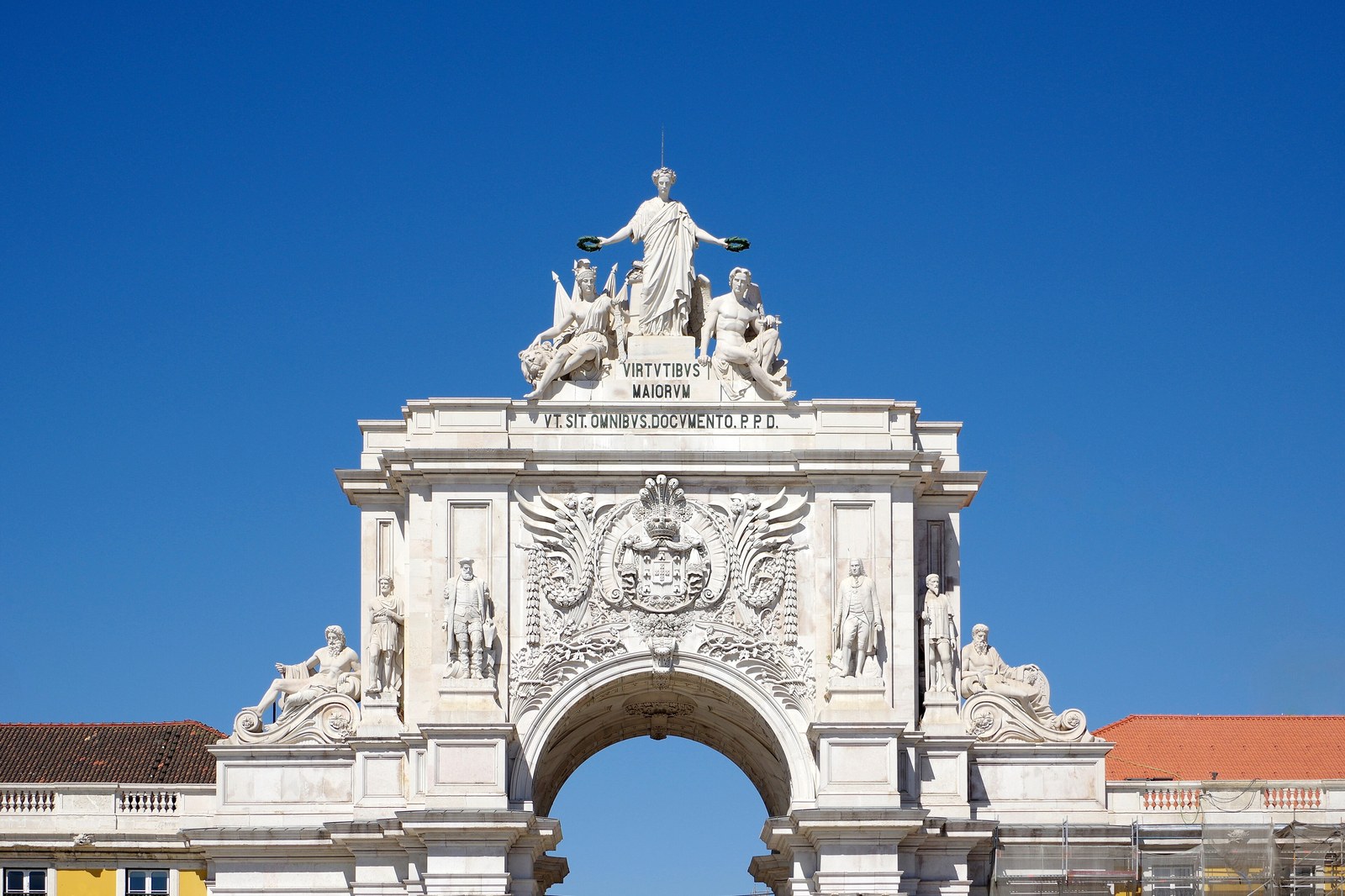 Photo: Berthold Werner · Wikimedia Commons (CC BY-SA 4.0)
01
Terreiro do Paço — Praça do Comércio
Baixa · Terreiro do Paço metro (blue line)
IntermediateLioz + calçadaBefore 9am
175 meters by 175, the biggest open square in the city, lined with arcades and wide open onto the Tejo. Under the galleries the ground is flat and clean; ten meters further out you’re back on cobbles that send every vibration straight into your ankles. This is Portugal’s postcard shot: at 11am you’re skating between three tour buses, at 8am it’s you and the seagulls.
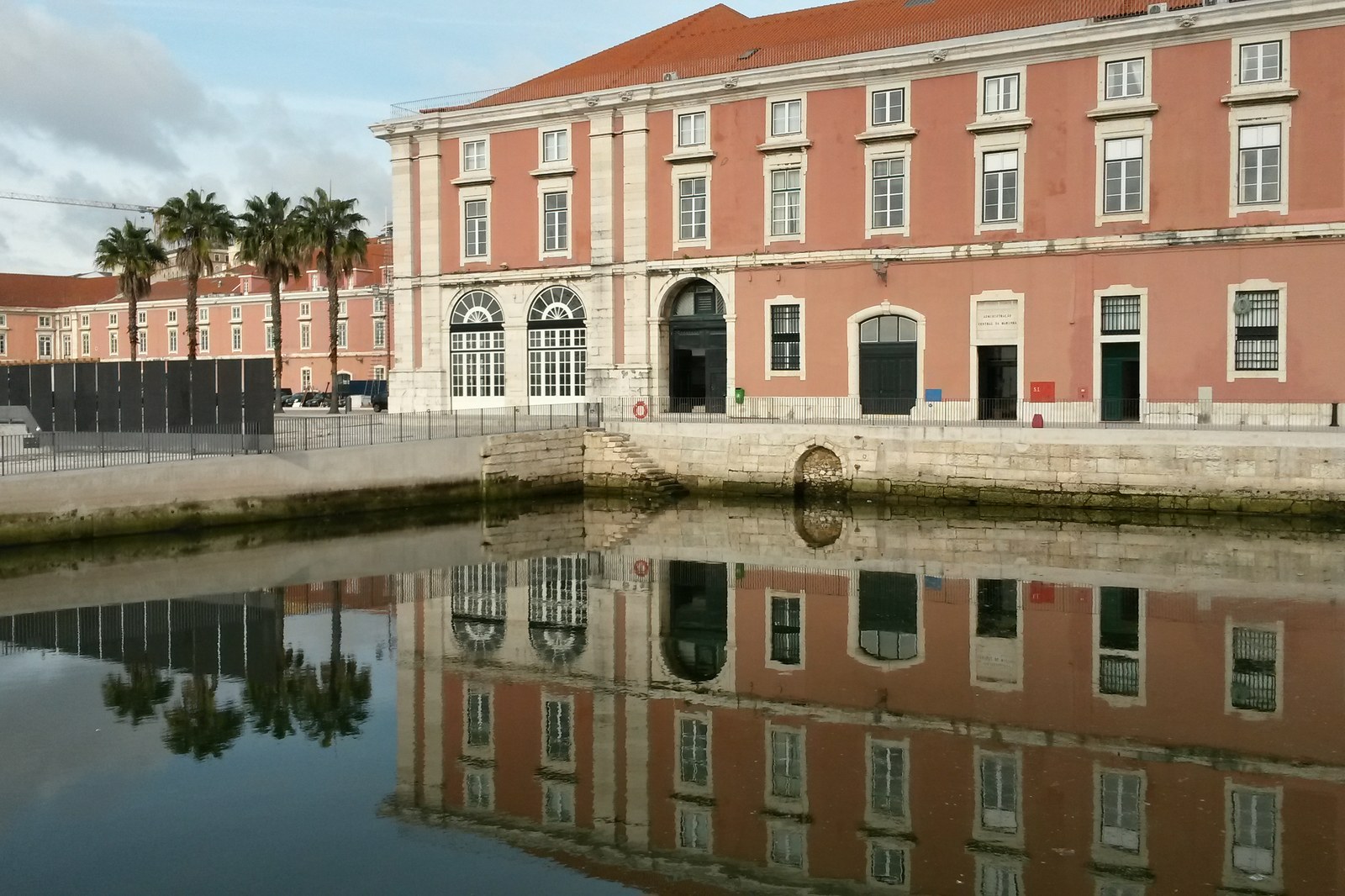 Photo: vanessa lollipop · Wikimedia Commons (CC BY-SA 2.0)
02
Ribeira das Naus
Riverfront, between Comércio and Cais do Sodré
Beginner-friendlySmooth stoneSunrise
This is where they built the ships of the Discoveries, then the Arsenal Real da Marinha after the earthquake, until the Navy moved out to Alfeite in 1938. The quay was handed back to pedestrians: long strips of stone, steps dropping down toward the water, a gentle grade you can push without working for it. Best place in the city to warm up before going after the serious ledges.
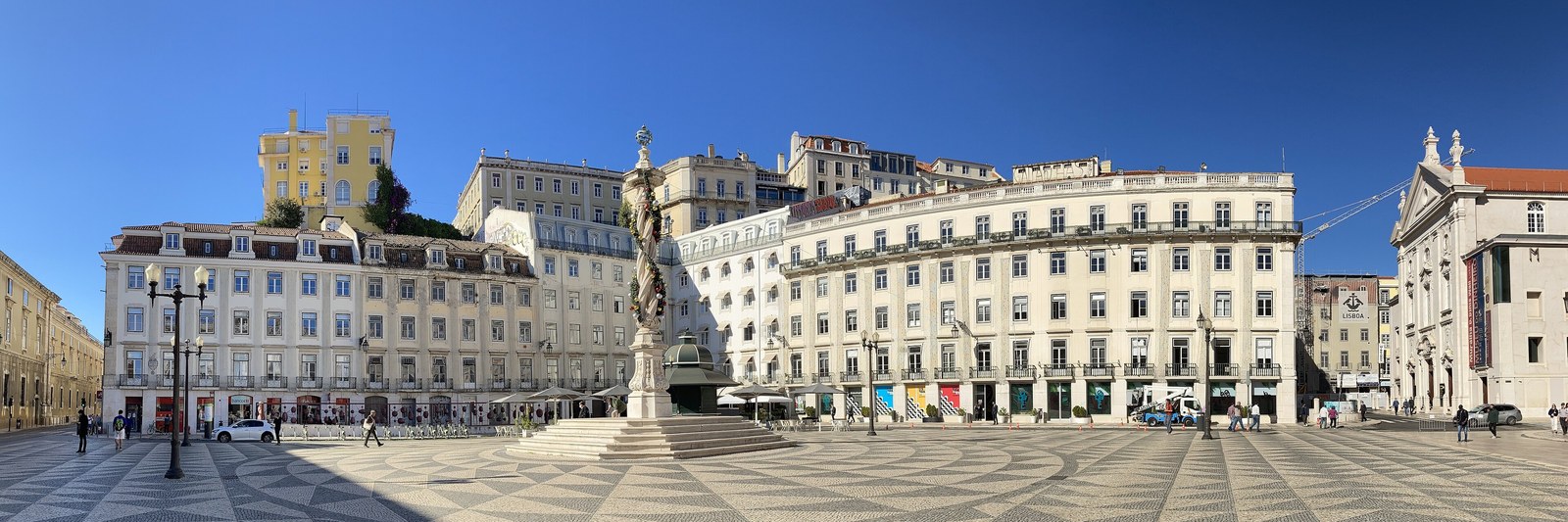 Photo: Dudva · Wikimedia Commons (CC BY-SA 4.0)
03
Praça do Município
Baixa · 300 m west of Terreiro do Paço
IntermediateLioz stairsSunday morning
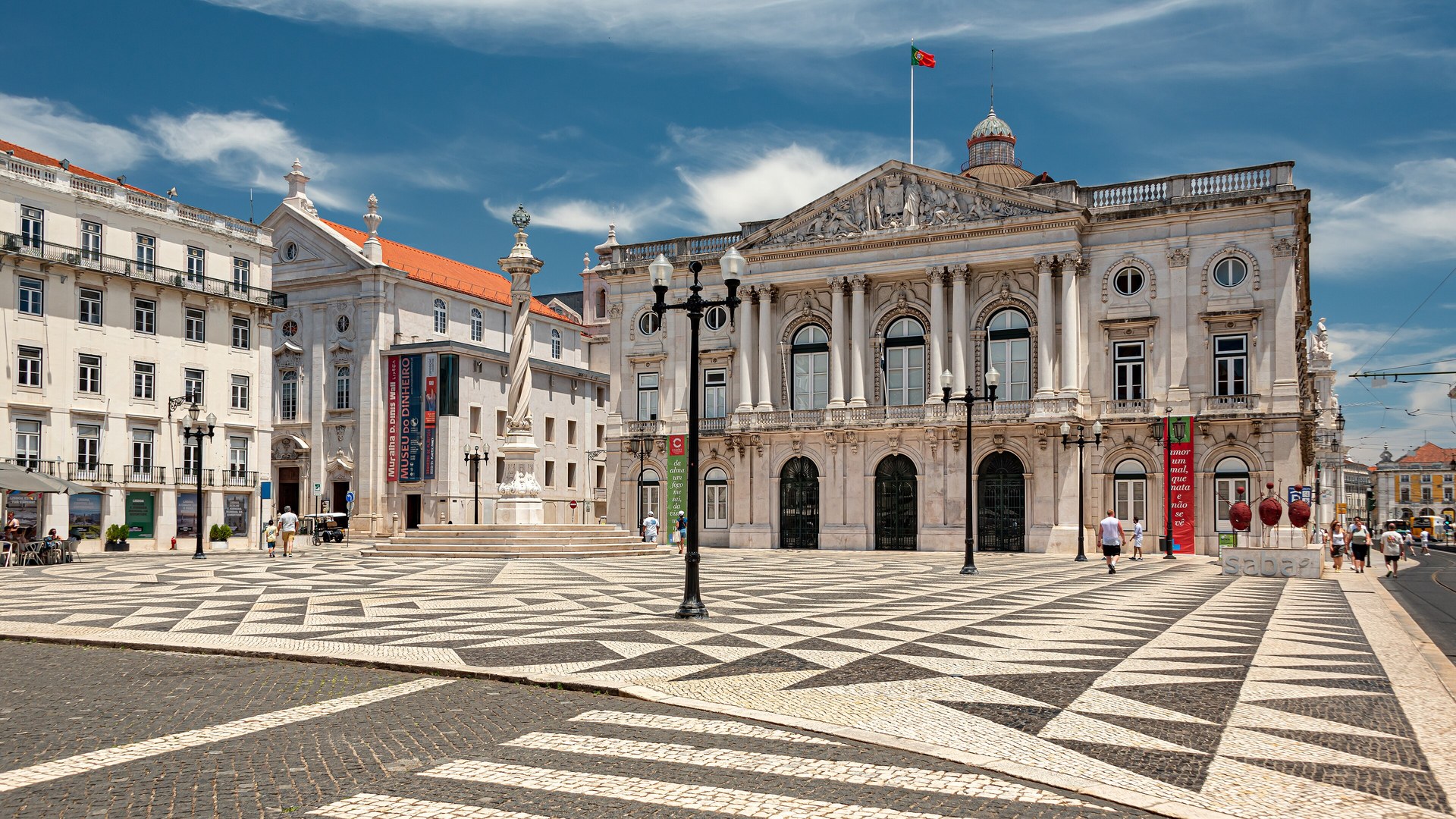
City hall, the twisted pillory in the middle, and a black-and-white zigzag floor that photographs beautifully and rides like hell. The part we care about sits around the edges: the stair sets in front of the Paços do Concelho, cut from the same limestone as the monuments, and the ledges ringing the square. Small, quiet, filmable from any angle.
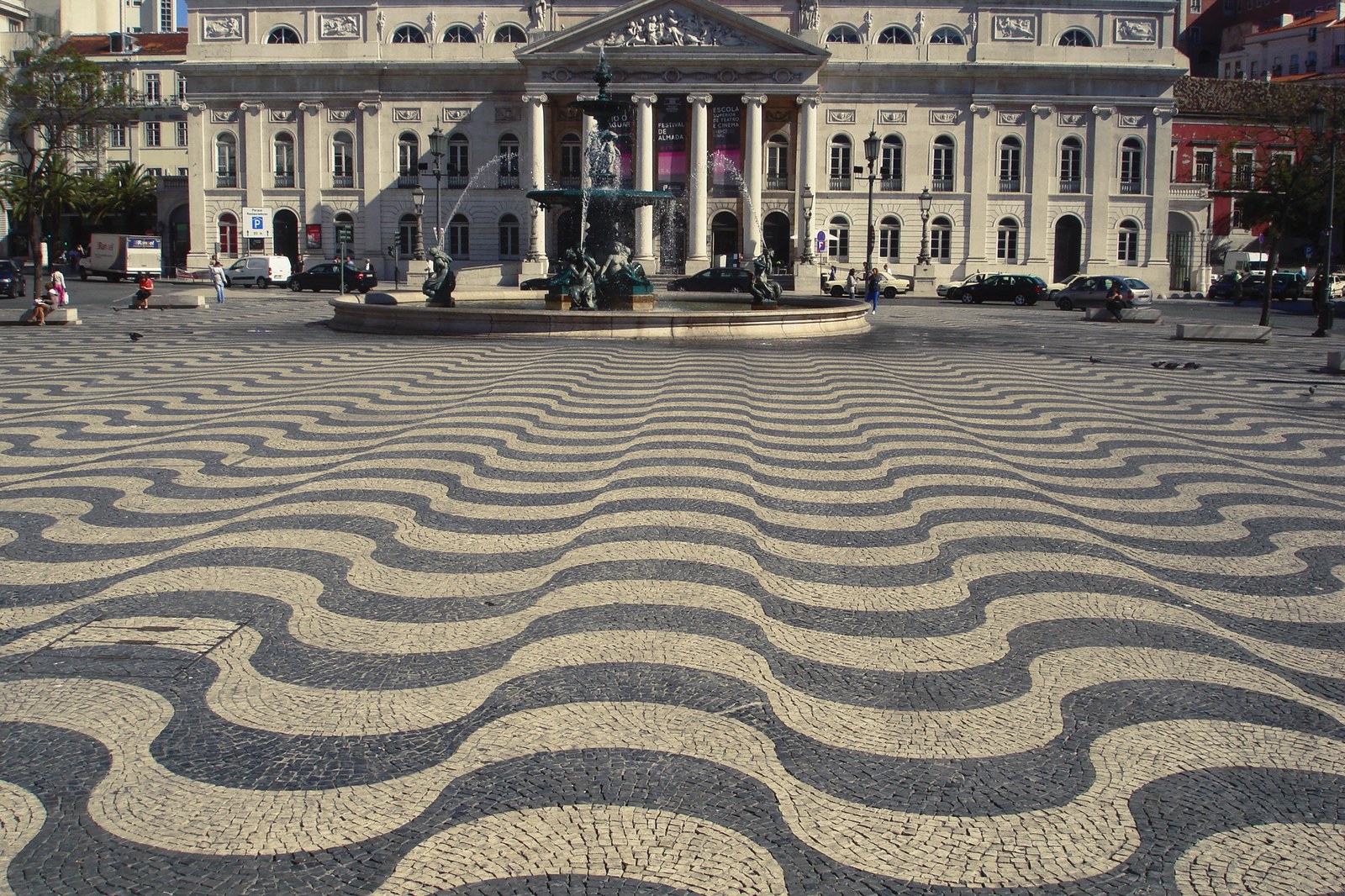 Photo: Roede · Wikimedia Commons (CC BY-SA 3.0)
04
Rossio — the plaza you don’t skate
Baixa · Rossio metro (green line)
AdvancedCalçada throughoutRoll through only
Rossio’s wave pattern was laid down in 1848 by General Pinheiro, a tribute to the navigators: it’s the city’s first big calçada portuguesa design, copied ever since all over the old empire. On a board, it’s a cheese grater. We list it for one reason only: so you get that half the ground in Lisbon is made of these little cubes, and that smooth is the exception, not the rule.

Gustavo Ribeiro skates the plazas of Lisbon, from the marble of the Baixa to the flatground of Parque das Nações — Red Bull Lisbon Conquest
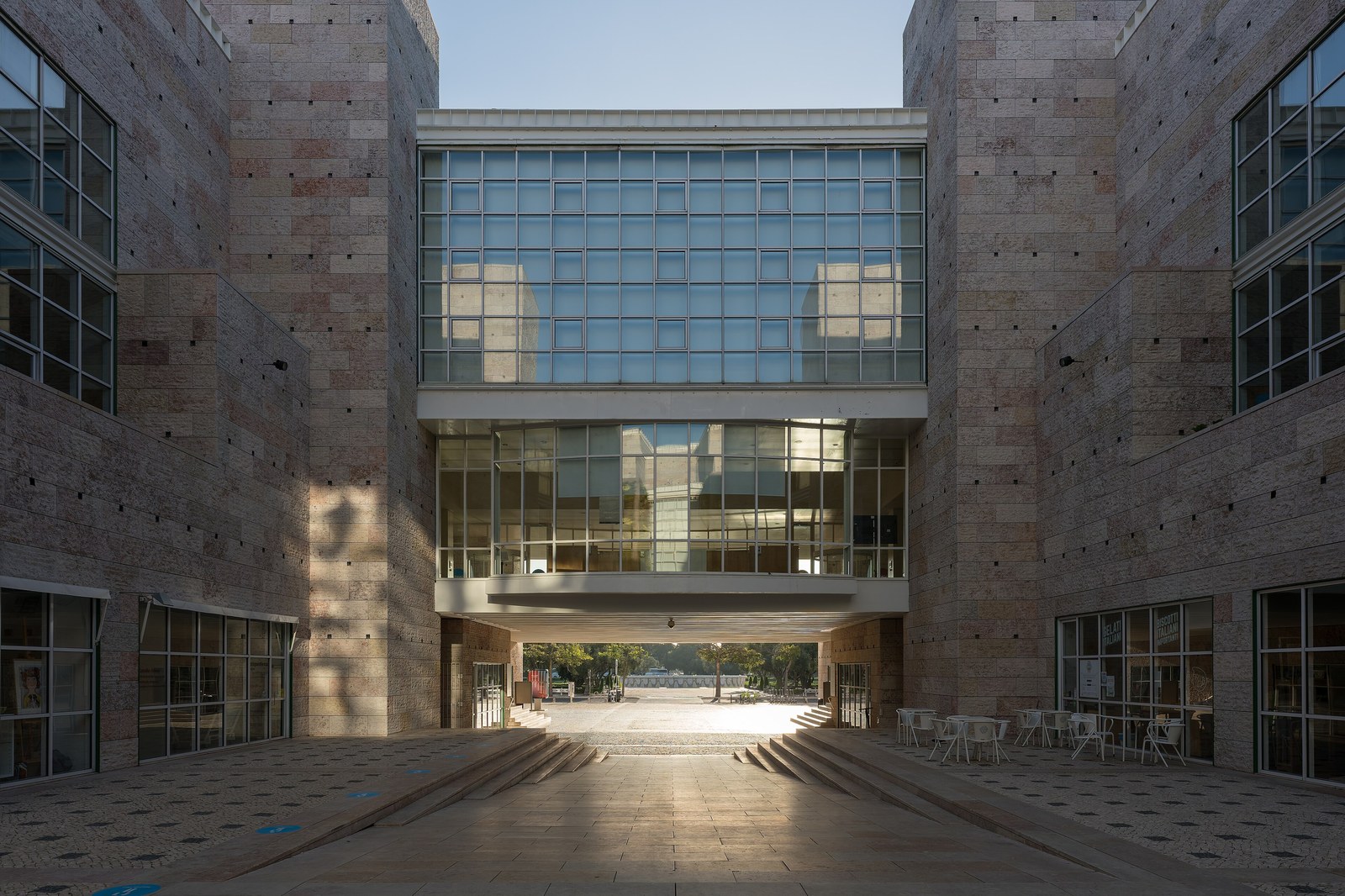 Photo: Jules Verne Times Two · Wikimedia Commons (CC BY-SA 4.0)
05
CCB — Centro Cultural de Belém
Belém · Tram 15 from the Baixa
AdvancedPolished liozSecurity on site
The one you come for. Opened in 1992, 140,000 m² of concrete and lioz, awarded at the Verona stone fair in 1993 for its stone architecture. Whole courtyards, banks, knee-high ledges, all of it in a material that slides by itself. The staff knows the drill better than any security guard in Europe: you’ve got time for two tries, rarely three.
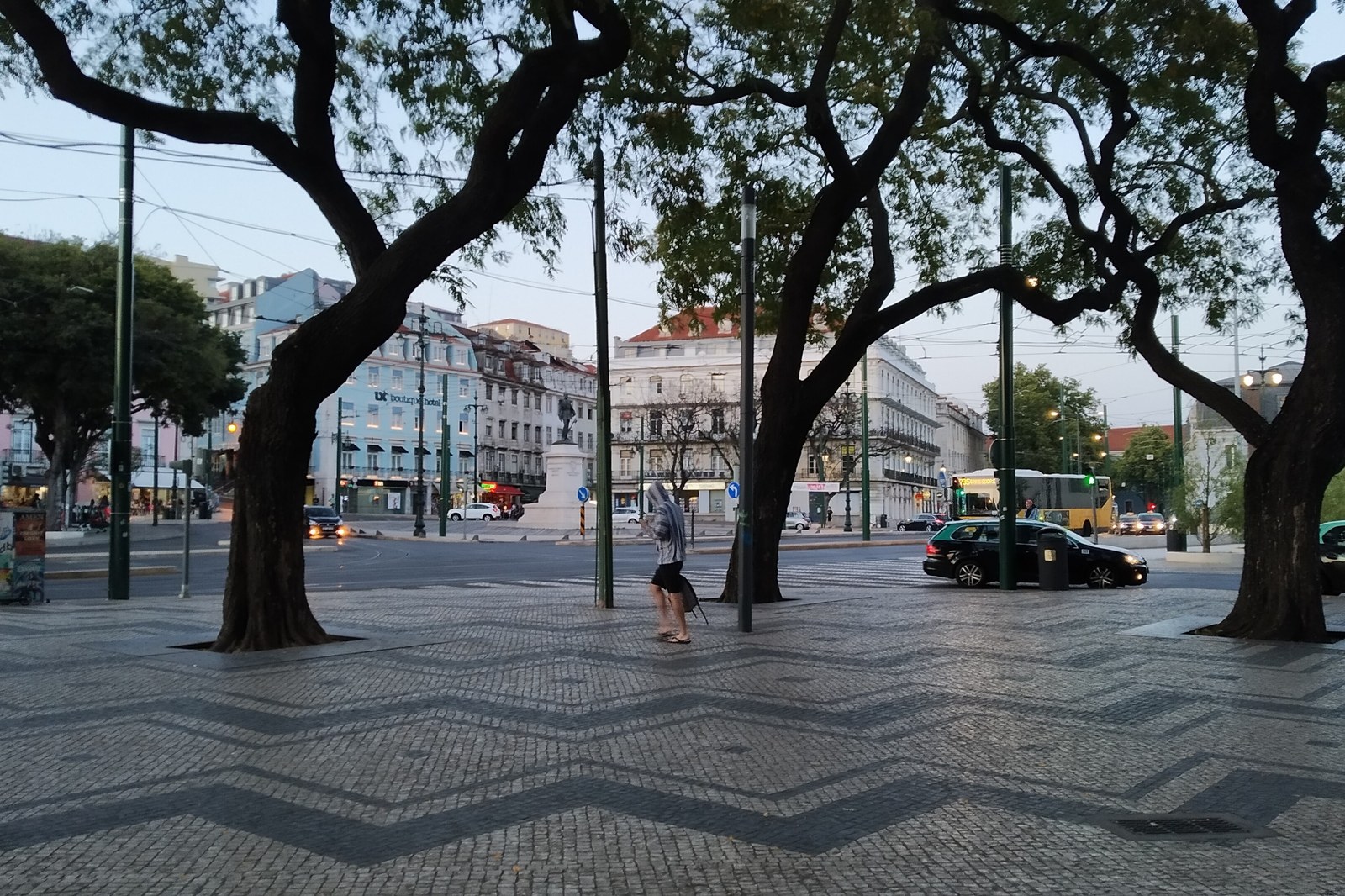 Photo: Ivanhercaz · Wikimedia Commons (CC BY-SA 4.0)
06
Cais do Sodré — Praça Duque da Terceira
Cais do Sodré metro (green line) · train station and ferry
IntermediateMixedAfter 10pm
Where the trains, the boats and the bars all meet: Pink Street is a hundred meters away. In front of the station, a flat square, low curbs, stone benches, and foot traffic that never really stops. The upside of the place is the noise: after 10pm, nobody notices one more pop in the loudest neighborhood in town.
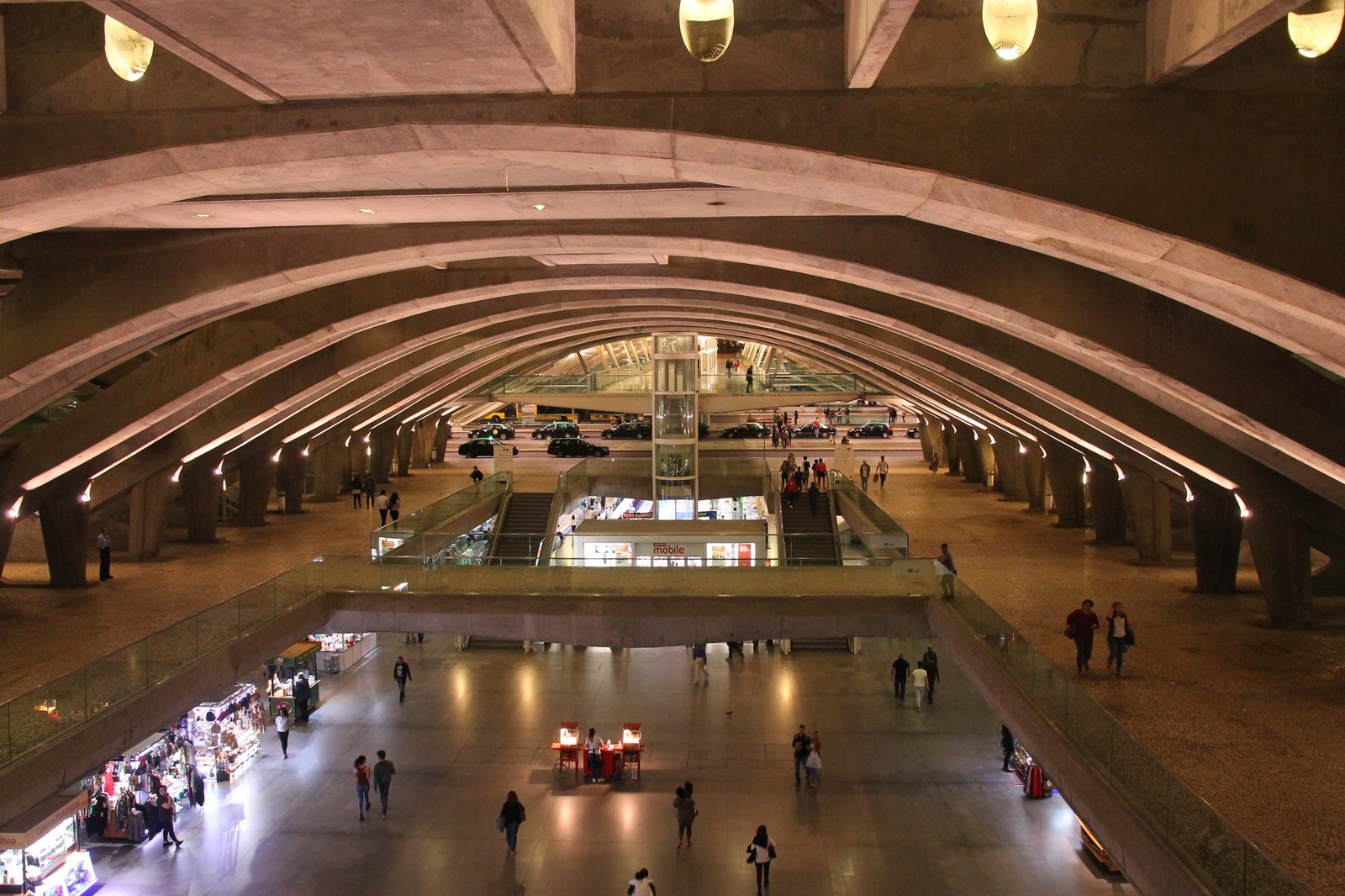 Photo: Draceane · Wikimedia Commons (CC BY-SA 4.0)
07
Parque das Nações — Gare do Oriente
Northeast · Oriente metro (red line)
Beginner-friendlyModern groundAll day
A district built from nothing for Expo 98, with Santiago Calatrava’s station and its palm-tree vaults right in the middle. It was all drawn up in one go: wide esplanades, stone benches, even landings, and room to pick up speed without slaloming through people. Two downsides: the mall security guards, and the wind off the Tejo that comes in gusts late in the afternoon.
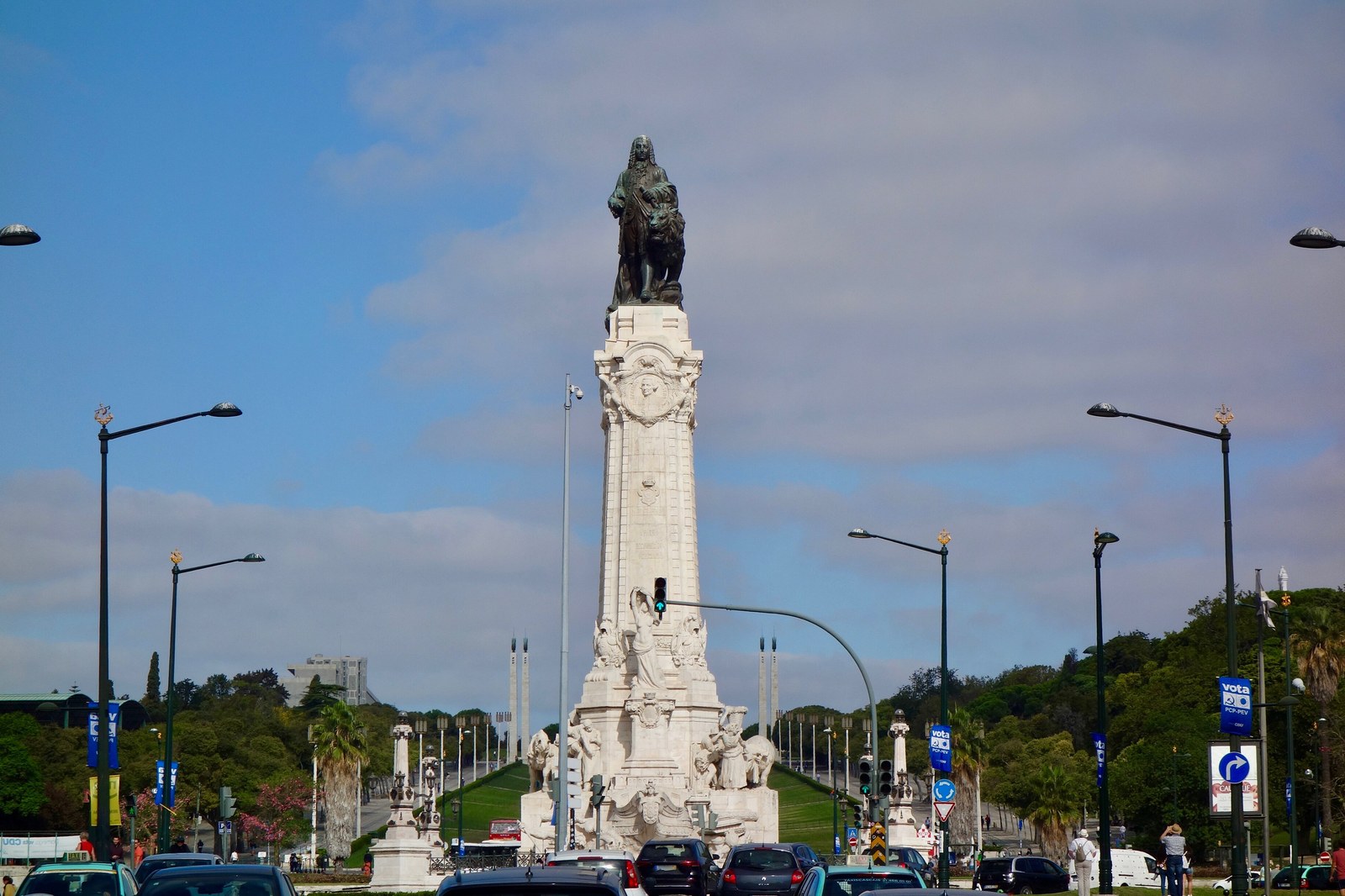 Photo: Sonse · Wikimedia Commons (CC BY 2.0)
08
Marquês de Pombal — Parque Eduardo VII
Top of the Avenida da Liberdade · Marquês de Pombal metro
IntermediatePaved slopeEnd of day
26 hectares of sloped park above the roundabout, with paved paths running straight down toward the city. It pulls fast, very fast, and the bottom of the park lines up ledges and landings for anyone who can handle the speed they show up with. The rest of the time, it’s the best viewpoint in Lisbon to wait out the sunset before the evening session.
Nobody there to kick you out: still true, or past its date?
Here’s the answer, no sugarcoating. The marble is still there, and it’s still better than anywhere else. The “nobody there to kick you out” part, though, has an expiration date: 10 in the morning.
What changed isn’t a rule, it’s a density. Portugal went from 16.4 million foreign visitors in 2019 to 29 million in 2024, and half those people are coming down the same stairs as you, at the same moment, camera in hand. Nobody banned anything: there are just too many people on the ground for you to push three times in a row.
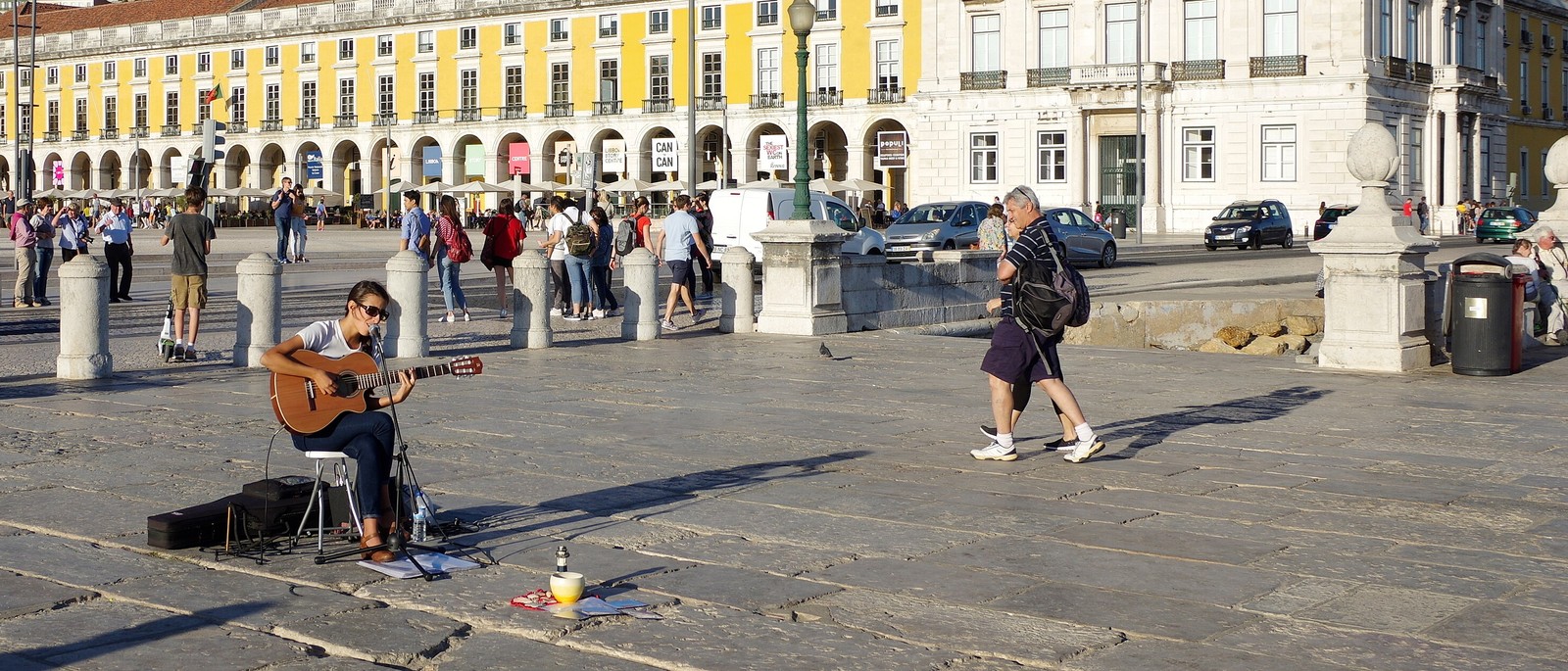
And when there’s a crowd, somebody eventually calls. The Independent crew, over in Lisbon to film in 2025, got run off by the guards at a tourist information center, then by the police. Alan Glass, who was filming, tells the same story you hear everywhere: what wrecks a session isn’t the security guards, it’s the pissed-off bystanders who dial the number. In Lisbon like in Berlin, where the tolerance stops at one very specific line, the bust doesn’t come from a law anymore. It comes from the number of witnesses.
That leaves a window, and it’s a wide one: before 10am and after 10pm, the city is still yours. Terreiro do Paço at first light is 30,000 m² of stone for you and two delivery guys. The CCB on a Tuesday in November at 9am is the best spot in Europe with nobody watching. Between 11am and 6pm, you share, you negotiate, you leave. Exactly what happened to the Trocadéro in Paris, except that in Lisbon the alternatives run into the dozens inside a two-kilometer radius.
The best argument for the city isn’t in a guidebook, it’s on a results sheet. Gustavo Ribeiro was born in Lisbon on March 27, 2001, he learned on those exact plazas, and he took the street world title in Rio in 2022, with the Street League crown the same year. A city that produces that hasn’t shut down. It just got busier.
Logistics: hours, wheels, getting around
Size up your wheels before you leave. Between spots you’ll be rolling over calçada, meaning thousands of little limestone cubes laid by hand. On hard 54s, you’re walking home. Wheels from 56 to 58 mm in 97-99A go everywhere without costing you the slide on lioz ledges.
Two windows, not three. 7–10am for the Baixa and Belém, more or less empty and already lit. 10pm–1am for Cais do Sodré and the riverfront, where the street noise covers the rest. In between, head up to Parque das Nações: it’s the only district big enough to soak up the visitors without crushing you.
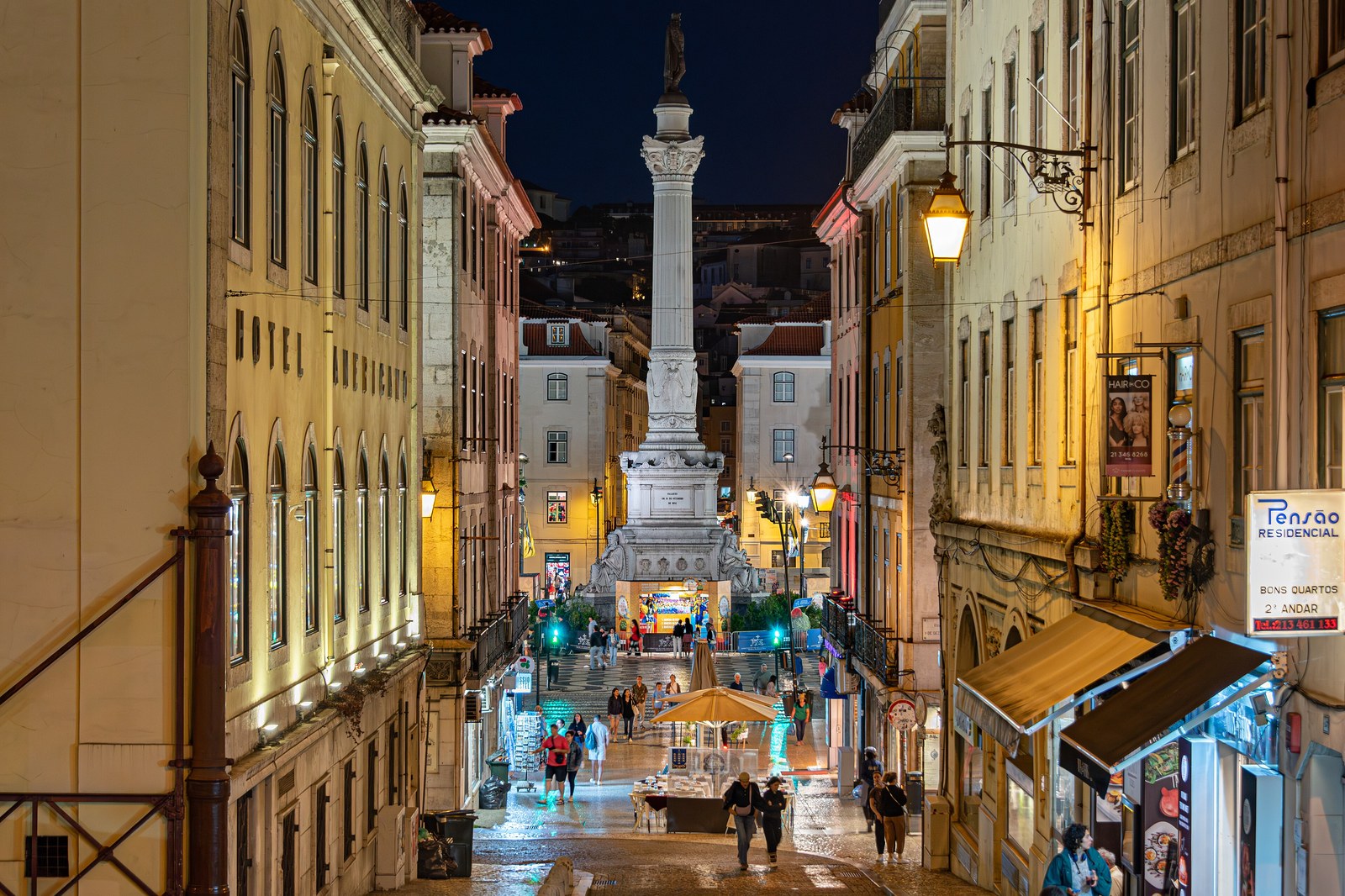
Don’t count on November rain to empty the plazas. Wet lioz doesn’t dry, it turns into an ice rink — that’s the flip side of those 0.1% absorption. An hour of drizzle late in the day costs you the whole evening, arcades included, where the damp creeps back up.
And if you want to see what the local next wave looks like before you book, the Portugal Rookie Fest 2026 gives a pretty clear idea of what the Portuguese scene is putting out right now.
{
"@context": "https://schema.org",
"@type": "Article",
"headline": "Lisbon, marble everywhere and nobody there to kick you out: 29 million tourists later, does it still hold up?",
"author": {"@type": "Organization", "name": "Nosk8"},
"datePublished": "2026-09-17",
"description": "The 8 Lisbon plazas behind its reputation as a marble paradise, the truth about lioz, and what time of day the city is still yours.",
"keywords": "Lisbon skate spots, skating Lisbon, lioz, Praça do Comércio, CCB Belém"
}
Got kicked out of a plaza in Lisbon, or had the CCB all to yourself? Tell us in the comments ↓
Le lexique
-
1
lioz
Calcaire compact et clair extrait autour de Lisbonne, si dur et si peu poreux qu'on le prend souvent pour du marbre.
-
2
calçada portuguesa
Pavage traditionnel fait de milliers de petits cubes de pierre posés à la main, magnifique à regarder et très inconfortable à rouler.
-
3
bust
Le moment où l'on se fait sortir d'un spot, par un vigile, un riverain ou la police.
-
4
wax
Bloc de cire frotté sur un bord ou un rail pour que la planche glisse au lieu d'accrocher.
Shop NOSK8
Voir toute la boutique →
TEE-SHIRTS
TEE-SHIRT NOSK8® P.B CENTRE #RNB
Le prix initial était : 35,00 €.29,00 €Le prix actuel est : 29,00 €.

TEE-SHIRTS
TEE-SHIRT NOSK8® P.B HEART #ORIGINAL
Le prix initial était : 35,00 €.29,00 €Le prix actuel est : 29,00 €.

TEE-SHIRTS
TEE-SHIRT NOSK8® P.B CENTRE #ORIGINAL
Le prix initial était : 35,00 €.29,00 €Le prix actuel est : 29,00 €.

TEE-SHIRTS
TEE-SHIRT NOSK8® NOSKATE #NSITA
Le prix initial était : 35,00 €.29,00 €Le prix actuel est : 29,00 €.

TEE-SHIRTS
TEE-SHIRT NOSK8® P.B HEART #POLARBEAR
Le prix initial était : 35,00 €.29,00 €Le prix actuel est : 29,00 €.

CASQUETTES
CAP NOSK8® P.B #POLARBEAR
Le prix initial était : 35,00 €.25,00 €Le prix actuel est : 25,00 €.

CASQUETTES
CAP NOSK8® N8 #NOSK8
Le prix initial était : 35,00 €.25,00 €Le prix actuel est : 25,00 €.

CASQUETTES
CAP NOSK8® P.B.P #PAW
Le prix initial était : 35,00 €.25,00 €Le prix actuel est : 25,00 €.

HOODIES
HOODIE NOSK8® NOSKATE #SNC
Le prix initial était : 60,00 €.49,00 €Le prix actuel est : 49,00 €.

HOODIES
HOODIE NOSK8® P.B CENTRE #RNB
Le prix initial était : 60,00 €.49,00 €Le prix actuel est : 49,00 €.

HOODIES
HOODIE NOSK8® MATRICE HEART #ALT
Le prix initial était : 60,00 €.49,00 €Le prix actuel est : 49,00 €.

HOODIES
HOODIE NOSK8® MATRICE HEART #CTRL
Le prix initial était : 60,00 €.49,00 €Le prix actuel est : 49,00 €.

HOODIES
HOODIE NOSK8® I.L.N #ILOVEN8
Le prix initial était : 60,00 €.49,00 €Le prix actuel est : 49,00 €.

SWEAT
SWEAT NOSK8® P.B HEART #NYC
Le prix initial était : 45,00 €.39,00 €Le prix actuel est : 39,00 €.
SWEAT
SWEAT NOSK8® P.B HEART #PARIS
Le prix initial était : 45,00 €.39,00 €Le prix actuel est : 39,00 €.
SWEAT
SWEAT NOSK8® P.B HEART #POLARBEAR
Le prix initial était : 45,00 €.39,00 €Le prix actuel est : 39,00 €.
SWEAT
SWEAT NOSK8® P.B HEART #BARÇA
Le prix initial était : 45,00 €.39,00 €Le prix actuel est : 39,00 €.
SWEAT
SWEAT NOSK8® P.B HEART #PHILI
Le prix initial était : 45,00 €.39,00 €Le prix actuel est : 39,00 €.
Continue ta lecture
SpotsMiyashita Park, Tokyo : un skatepark posé sur un centre commercial, on y roule vraiment ?
FRENESPT For fifteen years, Lisbon got passed around by word of mouth as the last place in Europe where nobody bothered you. Marble from the…
Commentaires (0)