
ℹ️ 🛹 Web Média Skate 🛹 ℹ️

Spots
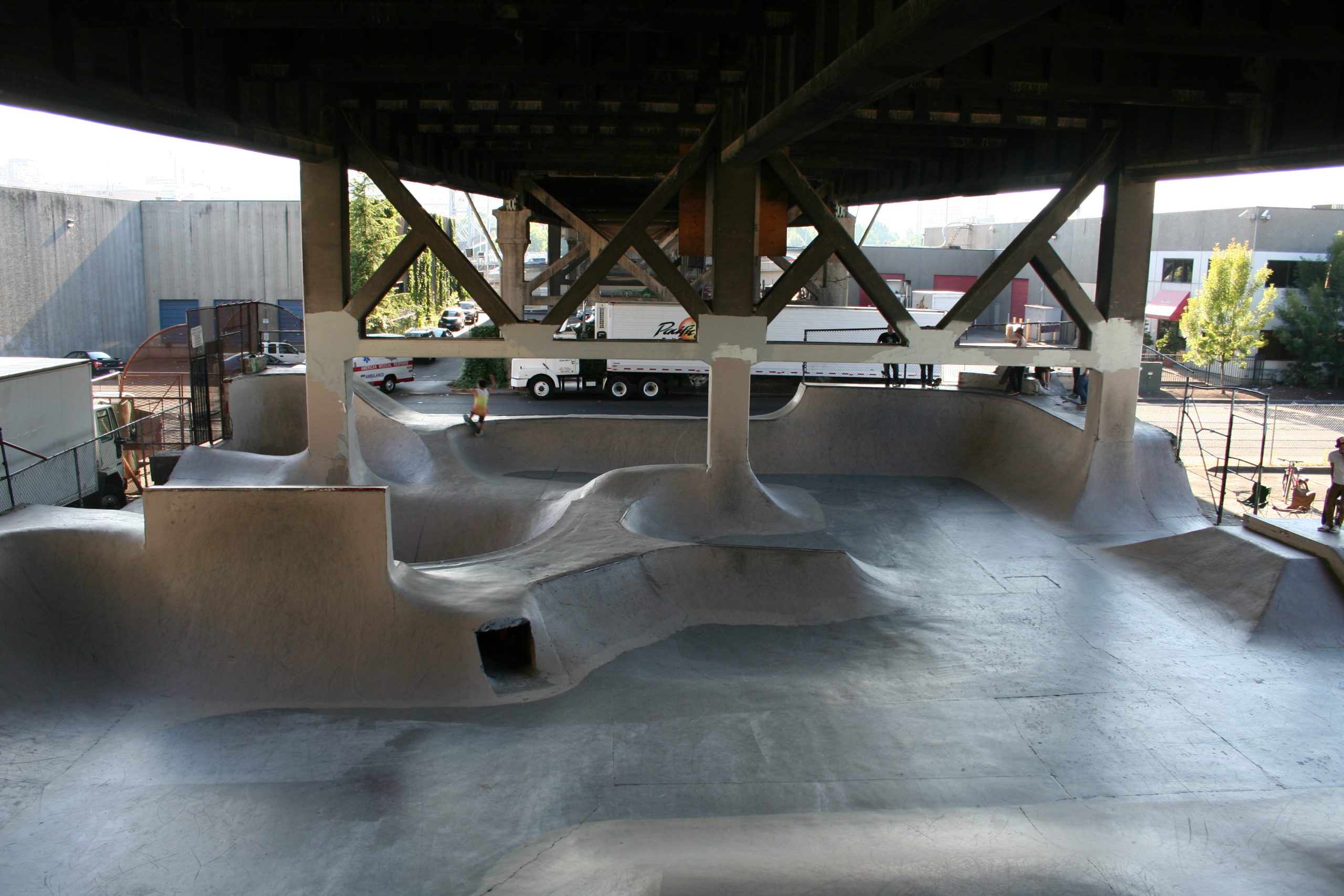
Burnside, 1990: The Illegal Park That Won
En 1990, des skateurs de Portland ont coulé du béton sous le Burnside Bridge sans permission. 35 ans plus tard, Burnside est le skatepark DIY le plus influent du monde. Histoire, anatomie et guide pratique.

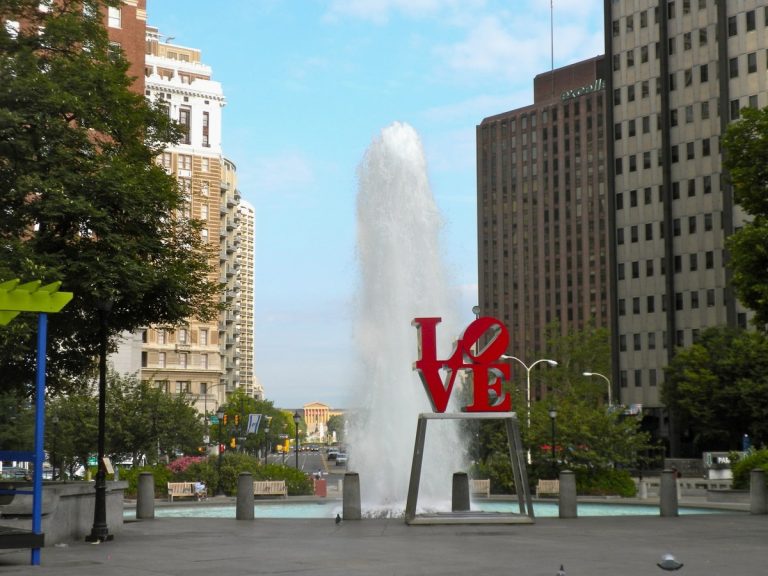
→ Pour aller plus loin : Pourquoi Philly a refusé 1 million de dollars pour LOVE Park ?
⏱ Read: 6 min
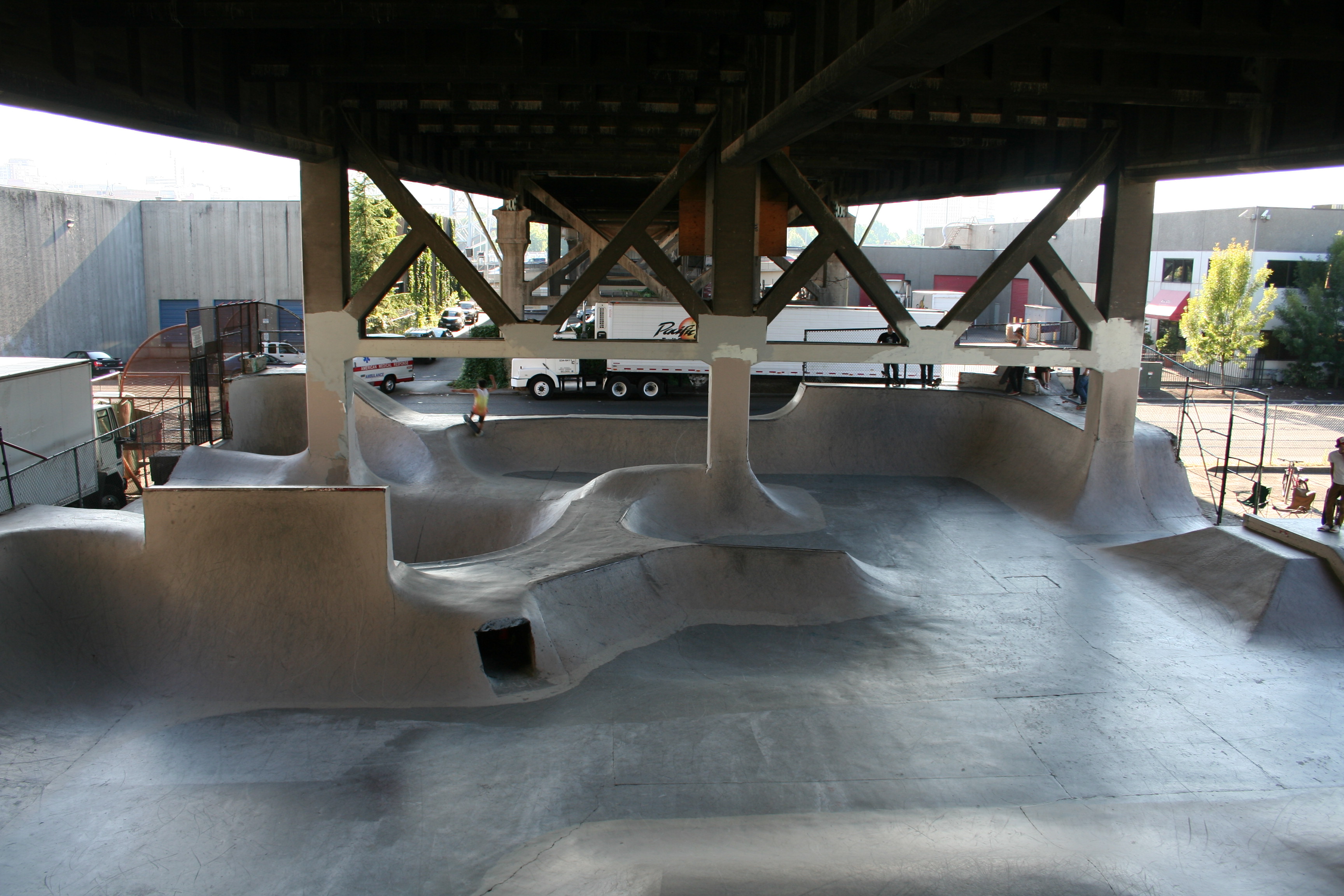
Photo: Adumbvoget · Wikimedia Commons (CC BY-SA 3.0)
In 1990, a crew of Portland skaters decided the city owed them a spot. Not an official skatepark with a fence and posted hours. A place of their own. Under the Burnside Bridge — the span crossing the Willamette River between downtown and the east side — there was a dead zone. Sand, trash, homeless tents. They started pouring concrete on a Friday night.
Nobody asked them to. Nobody gave them permission. They just put in the work. And they never stopped. Burnside is still standing. Still under construction. Still going off.
1990: when skaters took over a bridge
The DIY skate movement — Do It Yourself, building your own spots — has an exact birthdate in skate history: fall 1990, Portland, Oregon. Mark "Red" Scott and a handful of local riders claimed the space under the Burnside Bridge and poured their first batch of homemade concrete.
The city of Portland watched without stepping in at first. The work kept going, the shapes kept growing, riders kept showing up from farther and farther away. At some point, the authorities made a pragmatic call: retroactively legitimize what skaters had built without them. Today Burnside is a facility officially recognized by the City of Portland — a city that never designed a single inch of it.
They took a dead patch of ground under a bridge and turned it into a temple. No budget, no permits, no architect. — Mark "Red" Scott, Burnside founder (1990)
That precedent inspired dozens of DIY parks around the world — the FDR movement in Philadelphia, the under-the-bridge spots in Seattle, the underground bowls of Europe. Burnside is the blueprint. The spot proves skate culture can build its own infrastructure when cities won't.
The geometry of chaos — how it's built
Burnside looks like nothing else you've skated. No blueprint, no symmetry, no prefab modules bolted together on a Wednesday morning by a city crew. The shapes grew organically, session after session, year after year.
What's down there:
-
The main bowlConfirmed
Deep transitions, rusted steel coping, walls that run 7 to 10 feet in places. No flat bottom — everything flows into everything.
-
The street sectionIntermediate
Raw concrete ledges, a few stairs, hips linking the zones together. The ground is uneven — that's on purpose, it's part of the game.
-
The north extensionsEvolving
Added over the years by different generations of riders. Some shapes date back to the 90s, others were poured last year.
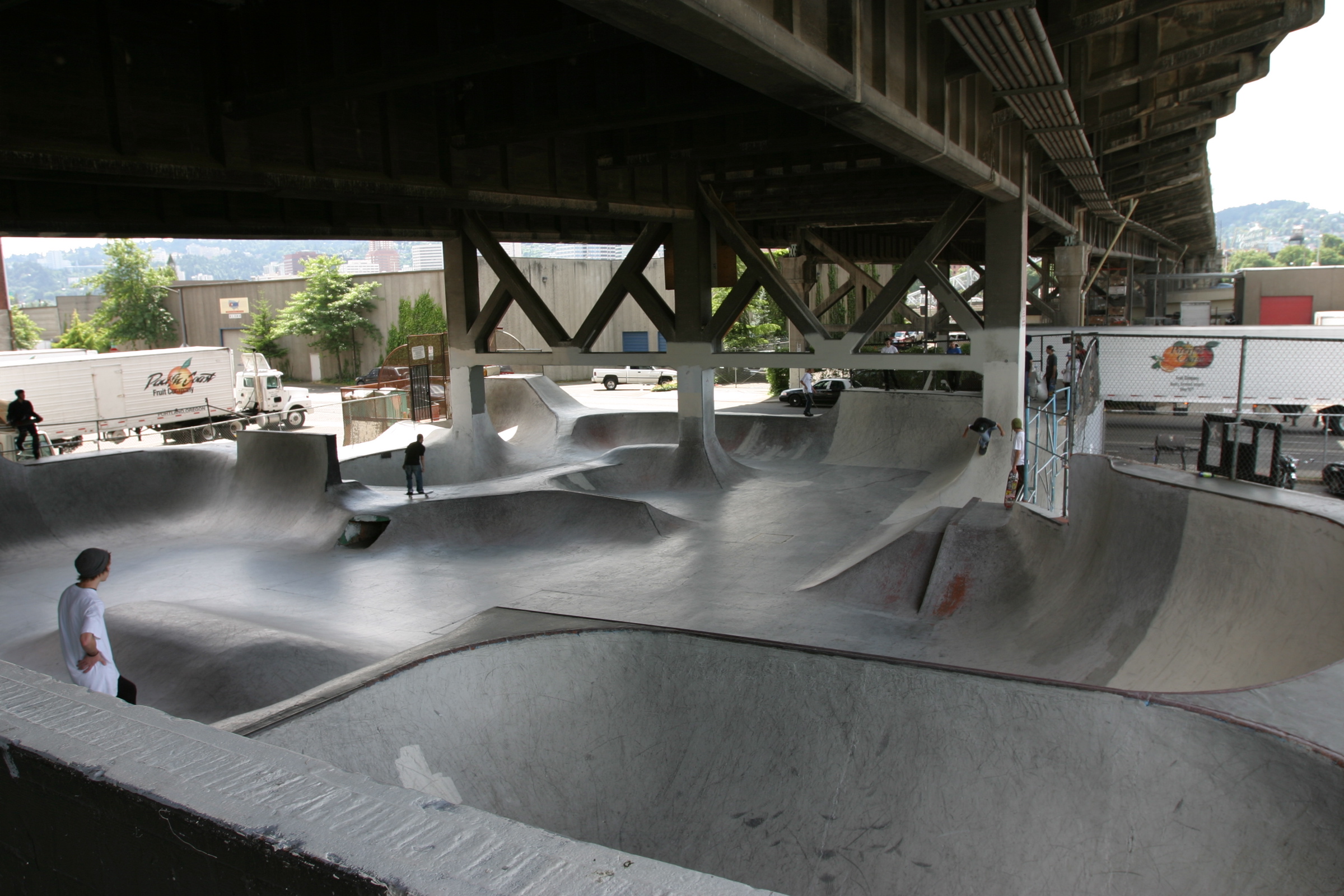
Photo: Cacophony · Wikimedia Commons (CC BY 2.5)
The concrete is unforgiving. Not ground down, not troweled to perfection. The rough spots have been there since day one — some on purpose, some not. Riders who come here know what they're getting into. Either you bring your helmet and your pads, or you learn to fall right.
(function(){
var VID='hNuEOVuuUOI';
var container=document.getElementById('yt-hNuEOVuuUOI');
var played=false;
function initPlayer(){
var player=new YT.Player(container,{
width:'100%',height:'450',videoId:VID,
playerVars:{cc_load_policy:1,cc_lang_pref:'fr',hl:'fr',mute:1,rel:0,autoplay:0,enablejsapi:1},
events:{
onReady:function(e){
try{e.target.setOption('captions','track',{'languageCode':'fr'});}catch(x){}
if('IntersectionObserver' in window){
var obs=new IntersectionObserver(function(entries){
if(entries[0].isIntersecting&&!played){played=true;e.target.playVideo();obs.disconnect();}
},{threshold:0.4});
obs.observe(container);
}
}
}
});
}
if(window.YT&&window.YT.Player){
initPlayer();
} else {
var prev=window.onYouTubeIframeAPIReady;
window.onYouTubeIframeAPIReady=function(){if(prev)prev();initPlayer();};
if(!document.querySelector('script[src*="youtube.com/iframe_api"]')){
var s=document.createElement('script');s.src='https://www.youtube.com/iframe_api';document.head.appendChild(s);
}
}
})();
Spitfire "Live to Burnside" — Thrasher Magazine
DIY skating before it became a buzzword
"DIY skateboarding" is everywhere in the mags these days. Articles, documentaries, dedicated Instagram accounts. But Burnside beat all of it by twenty years. When the founders poured their first concrete under the bridge, the term didn't even exist in skate culture. It was just dudes who wanted to skate and had nowhere to go.
What sets Burnside apart from everything that followed: it never stopped. The spot has never been "finished." New obstacles get added regularly by the local crew. Riders who roll through from all over aren't just spectators — some leave with concrete under their fingernails. That's the unwritten rule: if you want to pitch in, the tools are right there.
That model — collective takeover, community upkeep, permanent evolution — is exactly what the best DIY spots in Europe are running on today. The Brooklyn Banks movement in New York, the homemade bowls of the Netherlands, the underground spots of Lyon. Every one of them owes something to what went down under the Burnside Bridge in the fall of 1990.
Burnside proves an illegal spot can become an institution. Not by the grace of city hall — by the stubbornness of the riders. — DIY skate culture, Portland 1990-2026
Skating Burnside in 2026: what you need to know
It's open 24/7. No hours, no front desk, no security guard. You show up, you skate. The spot is partly lit at night by the bridge lights — night sessions have been part of the Burnside culture since day one.
The locals show up early morning and late night. Hit it mid-afternoon and you'll be sharing it with beginners, tourists, and people who just came to watch. The real Burnside is 7 a.m. or 10 p.m.
The concrete is hard and the ground is uneven. Bring full pads if you're not there yet. Burnside is no beginner spot — those deep bowl transitions can catch out experienced riders used to buttery skatepark concrete.
Getting there: 300 SE Ankeny St, Portland, Oregon 97214. Driving: free parking under the bridge on the east side. Transit: bus 14 or 70 from downtown. Walking from downtown: 15 minutes across the Burnside Bridge.
Summer is the best time. Portland weather does whatever it wants — the spot sits under the bridge, so sessions happen in the rain too. But in summer the concrete is warm and dry, the evenings stretch out, and the crew is at full strength. If you're flying in from France for a US trip, Portland and Burnside are worth the detour just as much as Love Park in Philly.
One last thing: if you roll up and see people working the concrete, don't get in their way. Offer a hand instead. That's how it's worked here for 35 years.
300 SE Ankeny St, Portland, Oregon — Burnside Skatepark (OpenStreetMap)
{
"@context": "https://schema.org",
"@type": "Article",
"headline": "Burnside Skatepark, Portland — The Illegal Skatepark That Became a Legend",
"author": {"@type": "Organization", "name": "Nosk8"},
"datePublished": "2026-06-29",
"description": "History and practical guide to Burnside Skatepark in Portland, Oregon — the DIY skatepark built illegally in 1990 under the Burnside Bridge, now the worldwide blueprint for community-built skateparks.",
"keywords": "Burnside Skatepark, Portland skateboarding, DIY skatepark, skate Oregon, legendary skate spots",
"about": {
"@type": "Place",
"name": "Burnside Skatepark",
"address": {
"@type": "PostalAddress",
"streetAddress": "300 SE Ankeny St",
"addressLocality": "Portland",
"addressRegion": "Oregon",
"postalCode": "97214",
"addressCountry": "US"
},
"geo": {
"@type": "GeoCoordinates",
"latitude": 45.5231,
"longitude": -122.6685
}
}
}
Ever skated Burnside, or know a DIY spot in your town that deserves the same respect? Drop it in the comments ↓
Follow NOSK8 where you hang out
Parts, spots, behind the scenes: it all drops on the accounts first.
Le lexique
-
1
bowl
Zone de skate en forme de cuvette avec des parois courbes. On roule sur les transitions pour prendre de la vitesse et sortir en hauteur.
-
2
coping
Rail métallique ou rebord en béton placé en haut de la transition d'un bowl. C'est là qu'on fait les grabs et grinds.
-
3
hip
Jonction entre deux plans inclinés qui forment une pointe ou une arête. Permet de relier deux zones du spot en un seul enchaînement.
-
4
DIY
Do It Yourself — construire son propre skatepark ou ses propres obstacles, sans l'aide des institutions ni des entreprises.
Continue ta lecture
ConseilsChoisir ses roues de skate selon son terrain — le guide sans chichi
Asphalte, béton, carrelage : comment choisir la bonne durométrie et le bon diamètre de roues de skate selon ton terrain réel. Guide pratique pour débutants…
Commentaires (0)