Tous les produits mis en avant dans cet article ont été sélectionnés indépendamment par nos rédacteurs. Les prix mentionnés dans cet article le sont à titre indicatif et susceptibles d’évoluer. Lorsque vous achetez via nos liens de vente, nous pouvons percevoir une commission d’affiliation.
Skateboarding is the practice of this 4-wheeled object, considered an art form, a hobby,a sport or even a means of transport.
Practitioners are called « skaters » or « riders, » and the verb « to skate » means « to practice skateboarding. »Skateboarding goes beyond just riding a board; it’s a lifestyle.
Since its beginnings in the 50s, skateboarding has seen many evolutions. Popularized in the 50s by the surfing community, skateboarding continued its rise until the mid-70s, becoming a fashion phenomenon, mainly in the West.
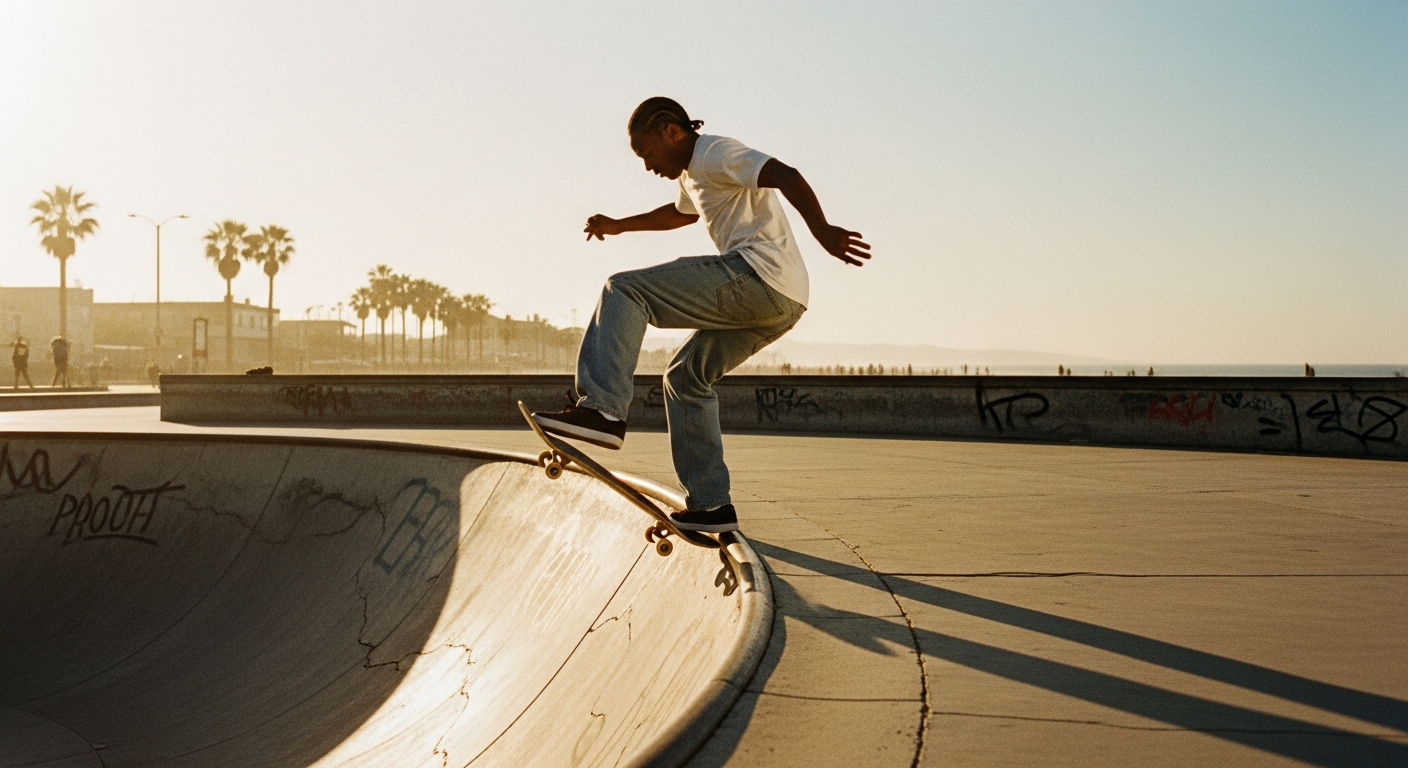
From the 1990s, skateboarding segmented into sub-genres: « Bowl, » « Vert, » and « Street. » Street skateboarding became the dominant discipline, mainly due to the possibility of practicing it in urban environments. Unlike « Bowl » and « Vert, » « Street » doesn’t require dedicated, specific structures to be practiced.
Gradually, skateboarding became a global cultural phenomenon, evidenced by the strong fashion influence of young skaters since the 90s, and also by its recognition by sports authorities (skateboarding’s entry into the Tokyo Olympics in 2021).
By the late 2000s, the skateboarding market was almost $5 billion annually, with an estimated community of around 14 million.
Practitioners are predominantly located in the United States and Brazil. France only accounts for 200,000, or 1.5% of the global skateboarding community.
THE 50S
Teenagers on a skateboard in the 60s
In the early 50s, surfers tired of waiting for favorable weather conditions decided to create a street surf. Skateboarding was born.
A rolling board capable of replicating the sensations of wave riding in the streets.
The first name for skaters was « asphalt surfers, » found in California and Hawaii.
The very first skateboard consisted of a small surfboard and metal wheels without bearings.
By the end of the 50s, skateboarding experienced its first major craze.
In 1959, Roller Derby released the first skateboard with technical innovations. The riding parameters were improved. Skaters could now start creating tricks.
THE 60S
In the early 60s, skateboarding became increasingly popular in the United States, especially on the « West Coast. »
Benefiting from industrial growth, skateboarding transitioned from a toy to sports equipment.
In 1962, the « Val-Surf » surf shop in Hollywood sold the first self-produced skateboards.
These boards featured a very surf-like board shape and roller skate trucks, sold as complete sets.
The same year, Patterson Forbes developed the first industrially produced boards with more advanced trucks.
In 1963, « Surf Guide Magazine » editor Larry Stevenson released the first skateboarding ad in a magazine. This year also marked the first skateboarding contest in Hermosa Beach, California.
The first version of the skateboard
First industrialization of skateboarding
As skateboarding’s popularity grew, « The Quarterly Skateboarder, » the first skateboarding magazine, was published in 1964.
Another major step was the new development in board shapes.
Larry Stevenson then invented the « kicktail, » which quickly offered new possibilities for skateboarding.
The clothing industry increasingly specialized in skateboarding. Vans, a pioneering brand dedicated to skateboarding, was created in 1966.
THE 70S
During the 70s, the world fundamentally changed, technologically, socially, and economically.
The world of skateboarding was no exception. In 1972, Frank Nasworthy’s invention of urethane (rubber) wheels marked a major new milestone.
He created « Cadillac Wheels » to offer these new, better-adapted skateboard wheels. This technology allowed for faster, more comfortable riding. Skateboarding was elevated.
In 1975, skateboarding-specific magazines like « Skateboarder Magazine » emerged, and new events were launched. The following year, the first skatepark was inaugurated, and new parks appeared with new elements like vertical ramps and kickers.
In 1978, Alan Gelfand invented the Ollie, which completely revolutionized skateboarding. This was the birth of street skateboarding!
Youth of the 70s skateboarding
THE 80S
Rodney Mullen was one of the first riders to transfer the Ollie from « Bowl Skateboarding » to the street (street skateboarding). Street skateboarding was just born.
Rodney Mullen, nicknamed « the father of street skateboarding, » created the vast majority of tricks used today.
His skateboarding practice was unprecedented and revolutionary for its time. Even today, his technical skill has rarely been matched.
Subsequently, street skateboarding became democratized and increasingly popular.
Skateboards of the 80s and Rodney Mullen
The beginnings of « Thrasher » magazine, illustrated
In 1981, « Thrasher, » a magazine specific to street skateboarding, was created.
Skateboarding’s popularity grew steadily.
At this time, the first skateboarding videos emerged on VHS, allowing an entire generation to discover skateboarding, its tricks (figures). Video would take a central place in the skateboarding world.
By 1985, vert skateboarding was replaced by street, and it became possible to be a pro and make a living from it.
THE 90S
In the early 90s, skateboarding faced a crisis, mainly due to the rise of other trendier sports.
Skateboarding returned to its fundamentals, and with digitalization, it maintained a popular presence.
By the mid-90s, modern skateboarding entered a new phase of evolution, which continues to this day.
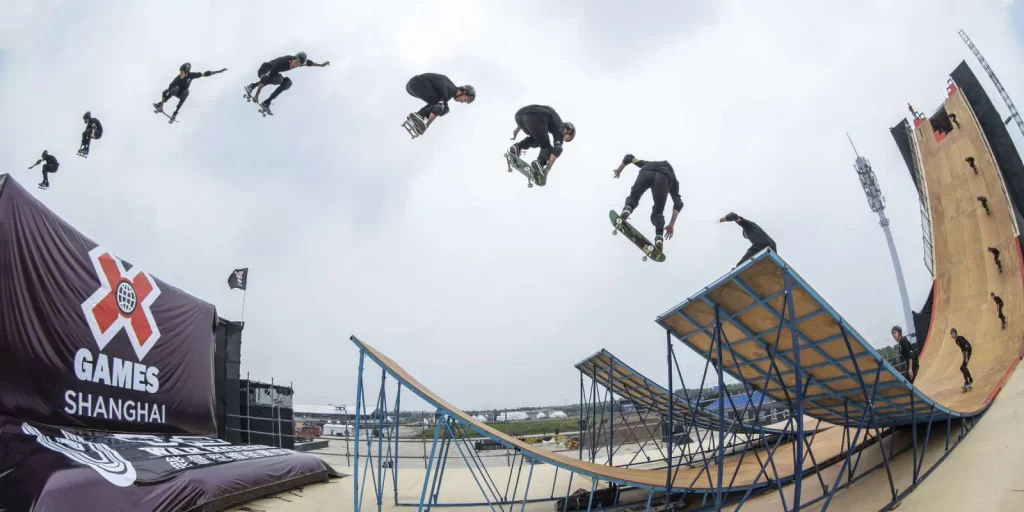
Huge events like the X-Games were launched and televised.
After magazines, events, videos, and the development of the internet, skateboarding became globally established.
Eric KOSTON, doing a « One foot » on a rail
THE 2000S
Stevie WILLIAMS with a « DGK » t-shirt
The 2000s saw the advent of street skateboarding contests, like events from Red Bull, Mountain Dew, and many others.
The « Street League Skateboarding, » created by and for pro skaters, serves as a benchmark in the world of street skateboarding because it’s the first contest exclusively dedicated to street skateboarding. It’s a way for the street community to take its destiny into its own hands and legitimize the sport without waiting for institutional sports bodies.
Prize money in these contests can reach 200,000 US Dollars, and over 10,000 visitors can be present at the « Street League Skateboarding. » Now, street skateboarding is a full-fledged professional sport, though the lifestyle remains the most important aspect.
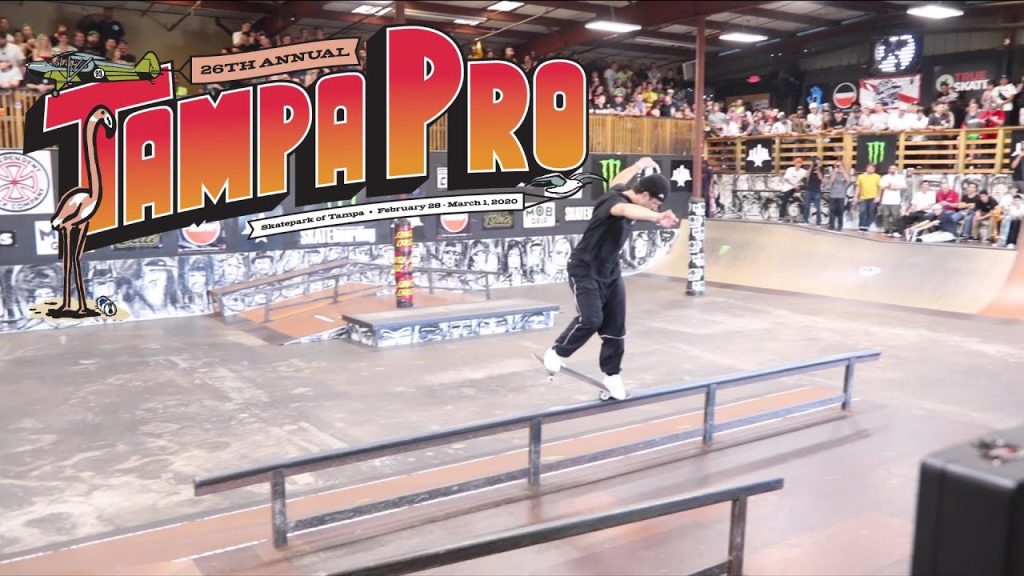
Tampa Pro: The annual pro skateboarding showdown that rips through Tampa, Florida. Every year, the legendary Skatepark of Tampa gets a complete overhaul with a brand-new course built from the ground up.
The Dew Tour is *the* extreme sports competition series, where the world’s best go head-to-head, showcasing pure style and raw creativity. And when it comes to the skateboarding – because that’s our jam – it’s all about street and bowl.
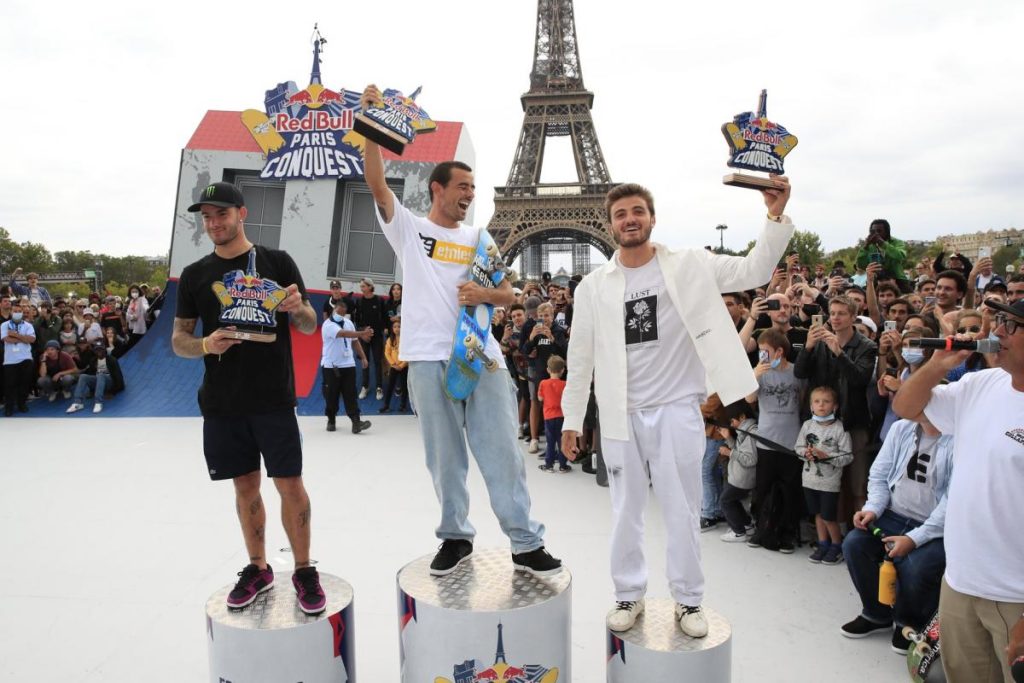
With Red Bull Paris Conquest hitting the streets, Paris is officially crowned the global capital of Street Skate! The planet’s top street pros are about to throw down at Trocadéro Square, where 7 of Paris’s most legendary skate spots have been shrunk down and rebuilt for an epic showdown.
Abonne-toi à la newsletter Nosk8 et reçois en avant-première des informations sur nos nouvelles collections, actualité de la marque & des offres exclusives.