


Video Days 1991 — 35 Years Later, the VHS That Changed Everything
35 years ago, a bunch of kids piled into an old blue Oldsmobile and drove across Los Angeles with a VHS camera. Nobody knew they were rewriting the rules of skateboarding. Blind Skateboards had just dropped the most influential video in skateboarding history.
⏱ Reading time: 4 min
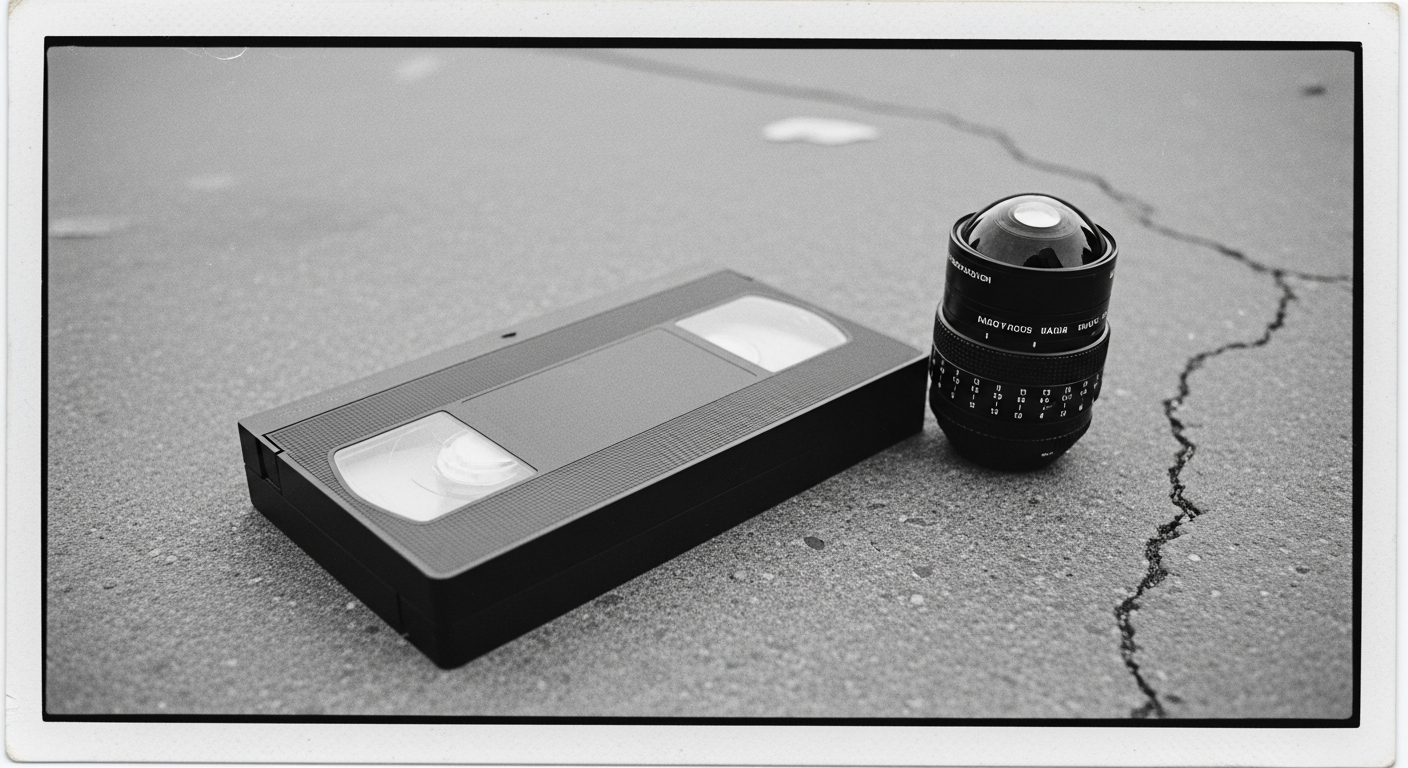
1991 — Vert Rules, Street Arrives
In 1991, Powell Peralta ruled skateboarding. Tony Hawk, Steve Caballero, Mike McGill — vert, ramps, aerial tricks. That was mainstream skateboarding. Street existed, but it didn’t have an official language yet, no format of its own.
Steve Rocco changed the game. With only $6,000 on his credit card, he founded World Industries in 1987. He understood before anyone else that the streets would kill the ramp. He backed Mark Gonzales, who created Blind Skateboards. And Gonzales recruited a young videographer who hung out with them in the streets: Spike Jonze.
The empire of big sponsors was crumbling. $80 boards with skull graphics? Done. A new era was beginning in the streets of Los Angeles — and nobody had quite grasped what was happening yet.
24 Minutes of VHS That Change Everything
Video Days dropped in 1991. 24 minutes. A fisheye lens. No producer, no budget, no plan. Just a crew of friends cruising in an old blue Oldsmobile through the streets of LA.
Gonzales’ intro kicks off with John Coltrane’s « Traneing In. » A Willy Wonka quote appears on screen: « We are the music makers and we are the dreamers of dreams. » This is 1991. No skateboarding video had ever done that.
The soundtrack mixes Jackson 5, Black Flag, Dinosaur Jr., and Ry Cooder. It’s not a playlist — it’s an education. Each part has its own sonic identity, its own universe. Something that didn’t exist before Video Days.
The cast: Mark Gonzales, Jason Lee, Guy Mariano, Rudy Johnson. Parts that Thrasher and Transworld still cite among the best in skateboarding history. Guy Mariano was 15 at the time. 15 years old.
Spike Jonze and Jason Lee — They Had No Idea
Here’s the detail that makes Video Days truly legendary: neither Spike Jonze nor Jason Lee knew what they were going to become. Jonze was just filming his friends. He had no declared cinematic ambitions. Just a camera, a fisheye, and a crew of skaters.
Kim Gordon from Sonic Youth stumbled upon the tape. She contacted Jonze to film a music video. Then Björk. Then the Beastie Boys. Then Fatboy Slim. In 1999, Being John Malkovich. In 2014, Her earned him an Oscar for Best Original Screenplay.
Jason Lee, meanwhile, skates like a god in Video Days. His part remains one of the most celebrated in the film. A few years later, he starred in Kevin Smith’s Dogma, Cameron Crowe’s Almost Famous, and became Earl Hickey in the series My Name Is Earl.
All of this came from a hastily shot VHS in the streets of Los Angeles. Nobody had a plan. Maybe that’s why it worked.
What Video Days Taught Us
There’s something irreversible about Video Days. The video proves that a fisheye, a crew of friends, and sincere music are worth a thousand times more than a polished production. It’s the manifesto of street skateboarding. The murder of the ramp. Proof that skateboarding is culture, not sport.
Mark Gonzales doesn’t just do tricks in the video. He paints murals on walls, he writes poetry, he talks to passersby. And it all ends up in the film. Gonzales is the first skater to fully exist beyond his board — and Video Days documents it before anyone understood what it meant.
35 years later, Video Days is still circulating. On YouTube, on DVD, in duplicated copies passed from hand to hand in skate shops. Kids who stumble upon it today have the same reaction as their parents did in 1991: this video comes out of nowhere and it changes something.
That’s what a classic is.