


Kareem Campbell — The Harlem Ghetto Bird Who Redefined Street Skateboarding
Born in Harlem, raised in Los Angeles, Kareem Campbell invented a trick, founded two brands, and opened the doors of skateboarding to an entire community. A look back at the journey of a man who changed street culture forever.
⏱ Reading time: 5 min
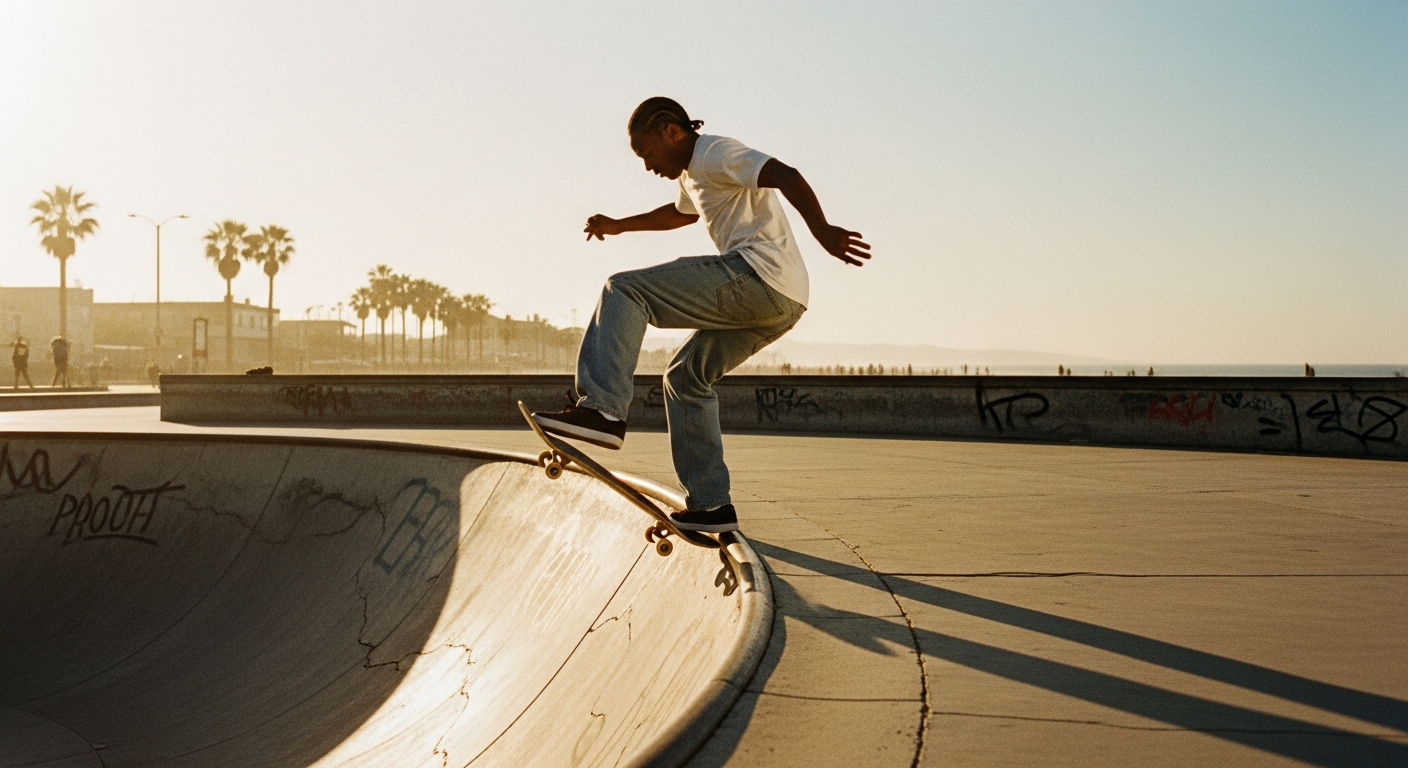
Kareem Campbell
Inventor of the Ghetto Bird. Founder of Menace, City Stars, and co-founder of Axion Shoes. Inducted into the Skateboarding Hall of Fame in 2021.
From Harlem to Venice Beach
The concrete of Harlem, New York. That’s where it all began for Kareem Campbell, on November 14, 1973. But it was in Los Angeles that his life took a turn. His family left the East Coast when he was six. Heading to California, far from New York’s tough streets. A new start. The kid didn’t know it yet, but he had just landed at the heart of the action.
Venice Beach, early 80s. Skateboarding was everywhere. Campbell grabbed his first board watching the neighborhood kids ride the sidewalks. No lessons, no skatepark. Just the asphalt, the desire, and bloody knees. He learned fast. Too fast. Local pros noticed him: Jef Hartsel, Jesse Martinez, Christian Hosoi, Eric Dressen. The launch ramp era was in full swing, and this kid from Harlem started turning heads.
What immediately struck you was the style. Campbell didn’t skate like others. His flow was liquid, almost nonchalant. Where most forced it, he glided. A fluidity born in the streets, not in a park.
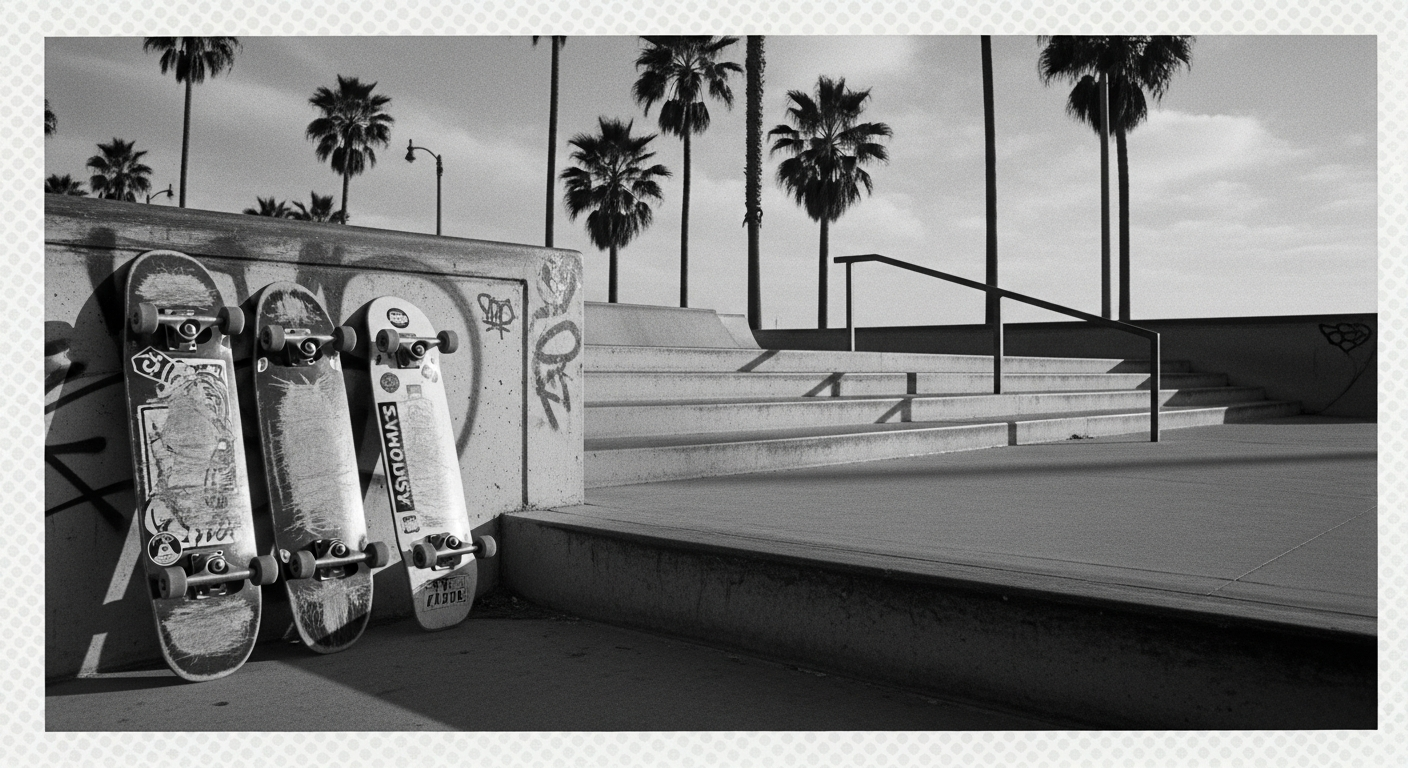
World Industries and the 90s Explosion
1992. Kareem Campbell turned pro at 18 with World Industries, Steve Rocco’s crew. It was the most rebellious, most creative, most influential team of the era. And Campbell fit right in, like a missing puzzle piece.
The videos kept coming, each one making history. New World Order in 1993, with Daewon Song, Eric Koston, and Guy Mariano. Then 20 Shot Sequence. And finally, the masterpiece: Trilogy, in 1996. Campbell’s part in Trilogy is raw, unfiltered skateboarding. Clips filmed all over the world, surgical switch hardflips, an ollie over the Santa Monica Triple Set that’s still burned into your retina.
« Kareem never forced anything. You watched him skate and it felt like the trick just happened on its own. That’s real style. »
The Ghetto Bird — A Trick, A Legend
A nollie hardflip late backside 180. Said like that, it’s technical. Seen in real life, it’s raw poetry. The trick appeared in issue 30 of 411 Video Magazine in 1998. Campbell landed it on a bank with a nonchalance bordering on insult. The skateboarding world couldn’t believe it.
The name comes from Ice Cube. « Ghetto Bird » is the police helicopter that flies over South Central neighborhoods. Campbell took the term, flipped it, made something beautiful out of it. The trick became iconic. It made its way into Tony Hawk’s Pro Skater and millions of kids worldwide tried to replicate it with their controllers before attempting it on the asphalt.
Building an Empire: Menace, City Stars, Axion
Campbell never just settled for riding. He built. First with Menace Skateboards, his first brand under Dwindle distribution. The message was clear: street skateboarding, with a street aesthetic. No compromises.
Then came City Stars Skateboards, still under Dwindle. A killer roster. And in parallel, he co-founded Axion Shoes, a shoe brand that fused hip-hop and skateboarding culture. Before it was trendy. Before luxury brands got into it. Campbell was there first.
His aesthetic — cornrows, do-rags, clothes inspired by basketball and hip-hop — wasn’t a costume. It was him. And it resonated. For the first time, Black and Latino kids saw themselves in skateboarding. They finally had someone who looked like them on magazine covers.
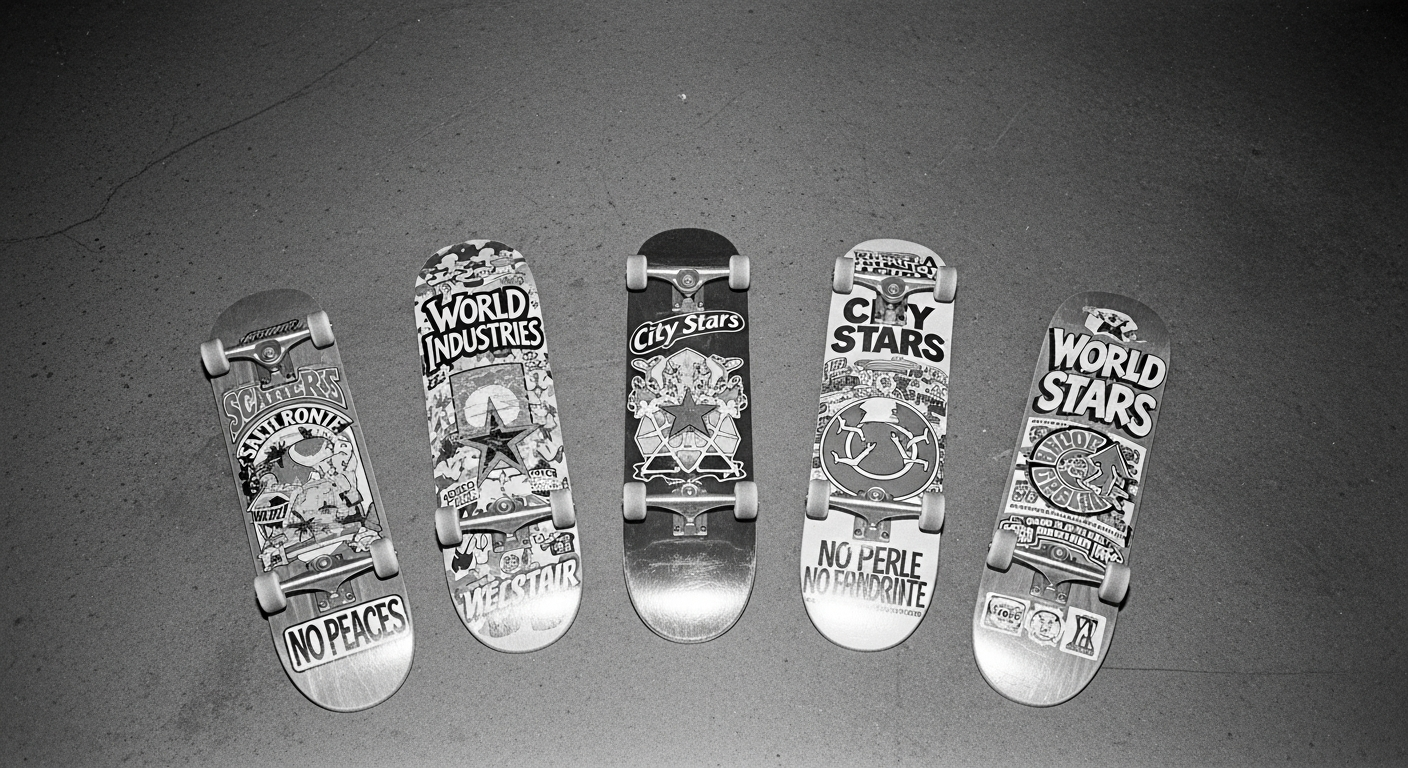
The Campbell Legacy
Tony Hawk himself said it: Kareem Campbell is responsible for opening up skateboarding to the Black community. That’s no small feat. In a sport long dominated by a white Californian culture, Campbell paved a path that entire generations followed after him.
« Kareem Campbell is responsible for raising the profile of skateboarding in the Black community. »
In 2021, he was inducted into the Skateboarding Hall of Fame. Official recognition of an extraordinary journey. But Campbell didn’t wait for trophies to keep giving back. Based in Dallas for over ten years, he runs the 4DWN Project, a community space dedicated to young people. Board in hand, he passes on what the streets of Venice Beach taught him.
City Stars keeps rolling. The Ghetto Bird keeps spinning in parks worldwide. And somewhere in Dallas, a kid lands his first nollie hardflip, thinking of that guy from Harlem who changed everything. If you want to discover another architect of street skateboarding, dive into the portrait of Mark Gonzales, The Gonz. Or go back to the roots with Rodney Mullen, the godfather of street skateboarding.