


Nosk8 ›
Tricks & Progression ›
Learning the Kickflip
Learn the Kickflip — The Most Iconic Skateboarding Trick Broken Down
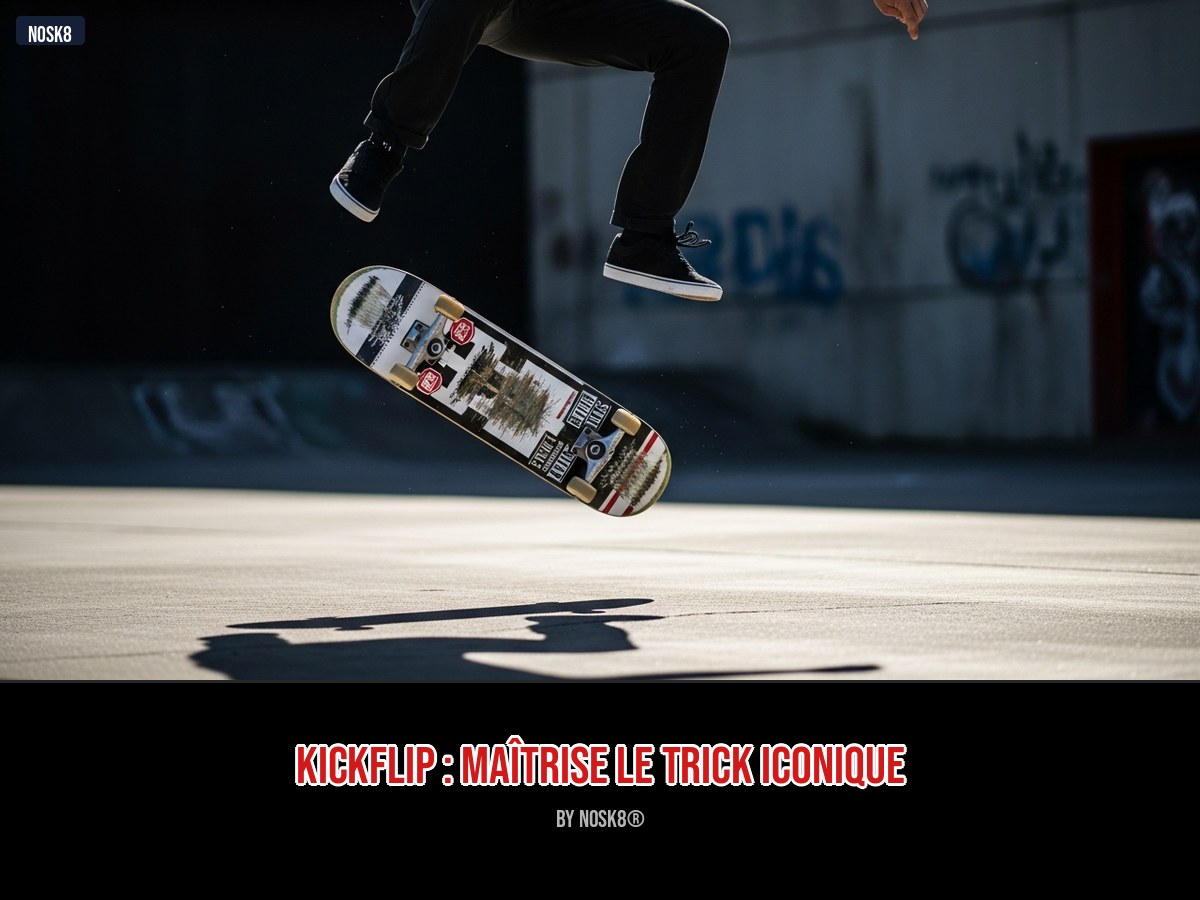
The kickflip. Two syllables that separate casual riders from true street skaters. It’s the first test you pass, the first filter. If you can’t land it yet, this guide will change that.
⏳ Reading: 5 min
Why the Kickflip Changes Everything
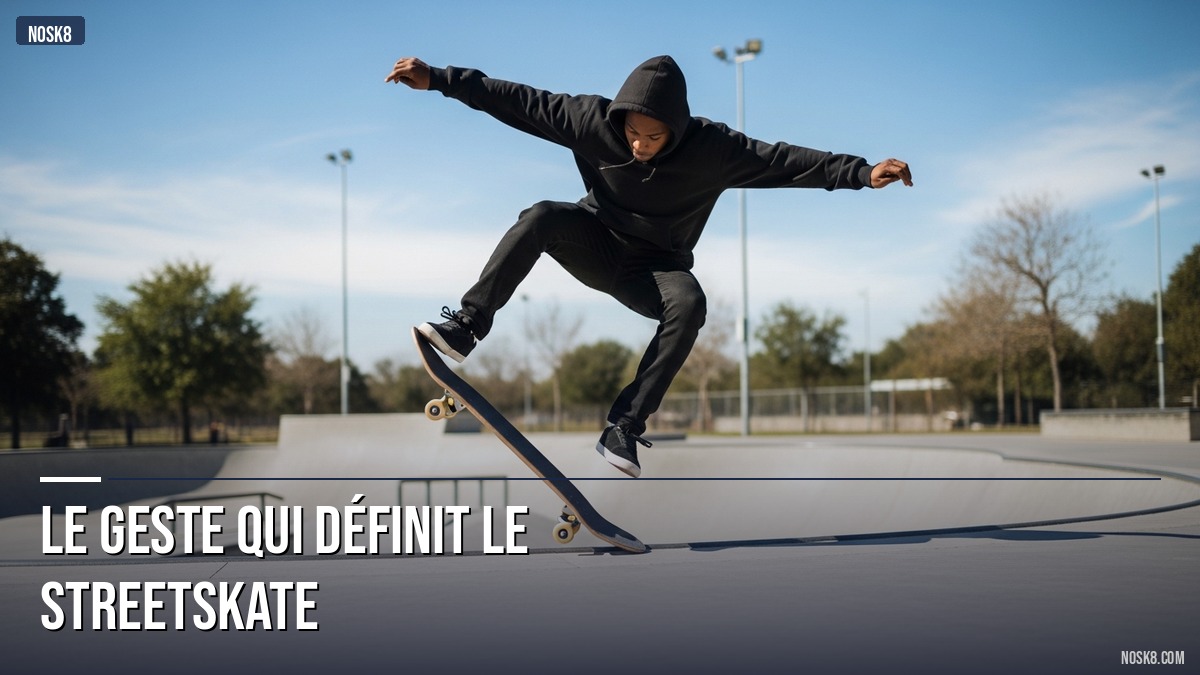
Rodney Mullen popularized it in 1983. Street skateboarding adopted it as its benchmark trick. Forty years later, the kickflip remains the standard measure of a skater’s skill. Not because it’s difficult — it is, but not as much as a switch hardflip. Because it’s universal.
Mastering the kickflip unlocks 80% of street tricks. The varial kickflip, the 360 flip, the kickflip backside tailslide on a ledge — it all starts here. It’s the foundational move of modern street skateboarding, the one you find in every part from the 90s to the SLS 2026 clips.
The absolute prerequisite: a solid ollie. Not perfect, just solid. If your ollie is inconsistent, the kickflip will be impossible. Start there if it’s not.
The Exact Mechanics, Step-by-Step
Foot Placement
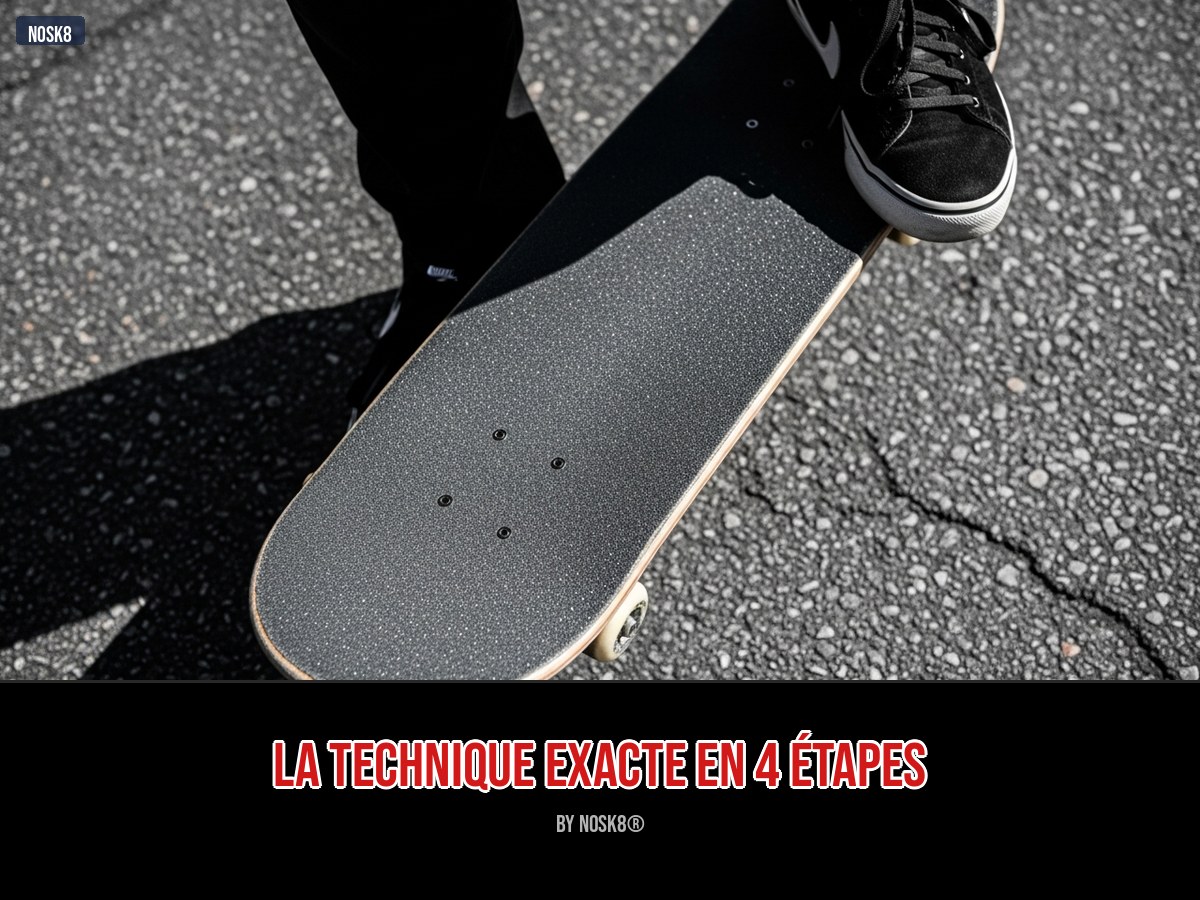
Back foot centered on the tail, ball of the foot on top — identical to the ollie. Front foot: slightly behind the front bolts, at about 45°, heel towards the nose. The exact position varies depending on shoe size and your board’s concave, but this 45° is the universal starting point.
The Pop and the Slide
Pop the tail on the ground like for an ollie. Simultaneously, your front foot slides towards the nose. This slide prepares the flick — without it, no rotation. Don’t neglect this sliding motion, it’s what positions your foot for the final flick.
The Flick — The Soul of the Trick
Once at the nose, your front foot kicks outwards towards the heelside. Not a leg movement — a snap from your ankle. The bottom corner of the nose is the contact point. That’s where the magic happens. The more precise and crisp your flick, the cleaner the rotation.
The Catch and the Landing
The board rotates 360° on its longitudinal axis. You catch first with your back foot (on the bolts), then your front foot lands. Ideally, both feet on the bolts simultaneously, legs extended, knees bent to absorb. Nothing spectacular — just clean and solid.
The 3 Mistakes That Block 90% of Skaters
1. The Mob Flip
The mob flip is when your front foot stays flat on the board during the rotation. Result: the board rotates partially, or not at all. Fix: think about lifting your front foot immediately after the flick. No contact with the board during rotation.
2. The Rocket Flip
The nose goes up, the tail drags. Your board looks like a rocket. Cause: your back foot isn’t lifting. Fix: practice high ollies by actively bringing your back foot towards your butt. The mechanics are the same for the kickflip.
3. Incomplete Rotation
The board rotates halfway, you catch the grip. Your flick lacks snap. Fix: practice the flick alone, board in hand. Hold the nose, flick with your front foot. Listen for the crisp sound of the perfect flick. Once you hear it, you’ll recognize it.
The 4-Phase Progression
Phase 1 — Static: board stopped, just try to make the board rotate cleanly. No need to catch at first. Aim for a clear rotation.
Phase 2 — Slow Motion: push gently, try the trick. Speed helps stabilize your body. Many skaters progress faster while rolling than while static.
Phase 3 — Consistency Before Height: forget height, aim for repeatability. 5 kickflips in a row, clean and on the bolts. Height comes naturally with confidence.
Phase 4 — Into Obstacles: kickflip over a curb, over a kicker. The mental pressure changes everything. That’s when the trick truly becomes yours.
Flick
Durability
Price-Value
Nike SB Zoom Blazer Mid — The Perfect Flick
The thin vulcanized sole of the Nike SB Zoom Blazer gives maximum board feel. The kickflip becomes instinctive. It’s the shoe most street skaters wear for a good reason.
Between 80 and 120 euros
Free shipping · 30-day returns
What After the Kickflip?
Once the kickflip is solid, the field of possibilities opens up. The heelflip — its toeside twin — is the natural next step. Same mechanics, opposite flick. Many skaters find one more natural than the other depending on their stance.
After that: the varial kickflip (kickflip + backside 180 of the board), the nollie kickflip, then the 360 flip. Each trick flows from the previous one. The kickflip isn’t an endpoint — it’s a starting point.
A good adapted setup also changes the game. A board that’s too wide makes the flip harder, a board that’s too narrow lacks stability on the catch. Most street skaters start with an 8.0″.