

Nosk8 ›
Chronicles ›
Tampa Pro 2026
Tampa Pro 2026 — Netsuke, Gonzalez, and the New Map of Global Skateboarding
The Skatepark of Tampa has just closed its doors on its 32nd edition. The verdict is clear: competitive street skateboarding has a new geography, and Europe is no longer part of it.
⏱ Reading time: 4 min
Tampa, 32 Years as the Thermometer of Global Skateboarding
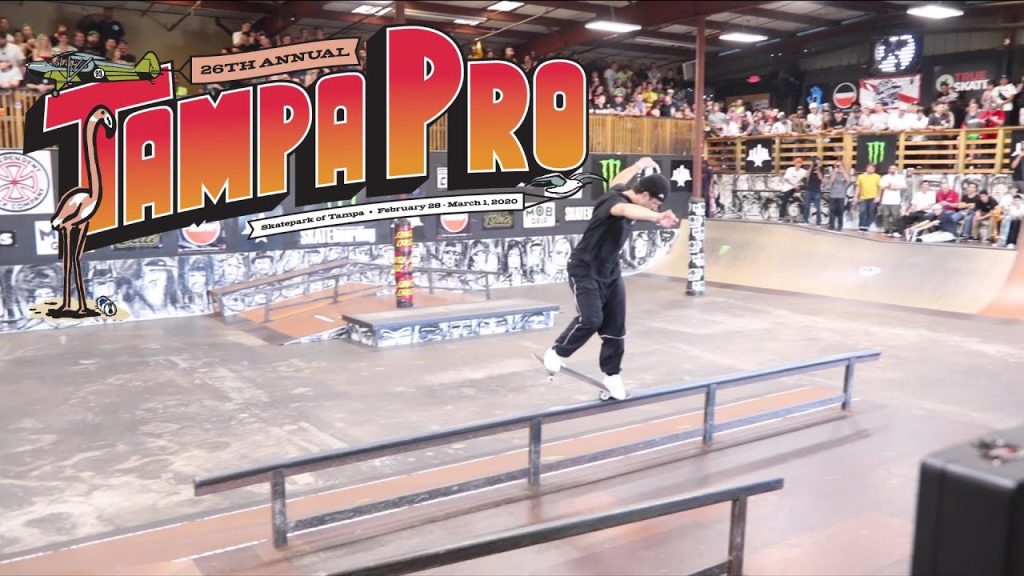
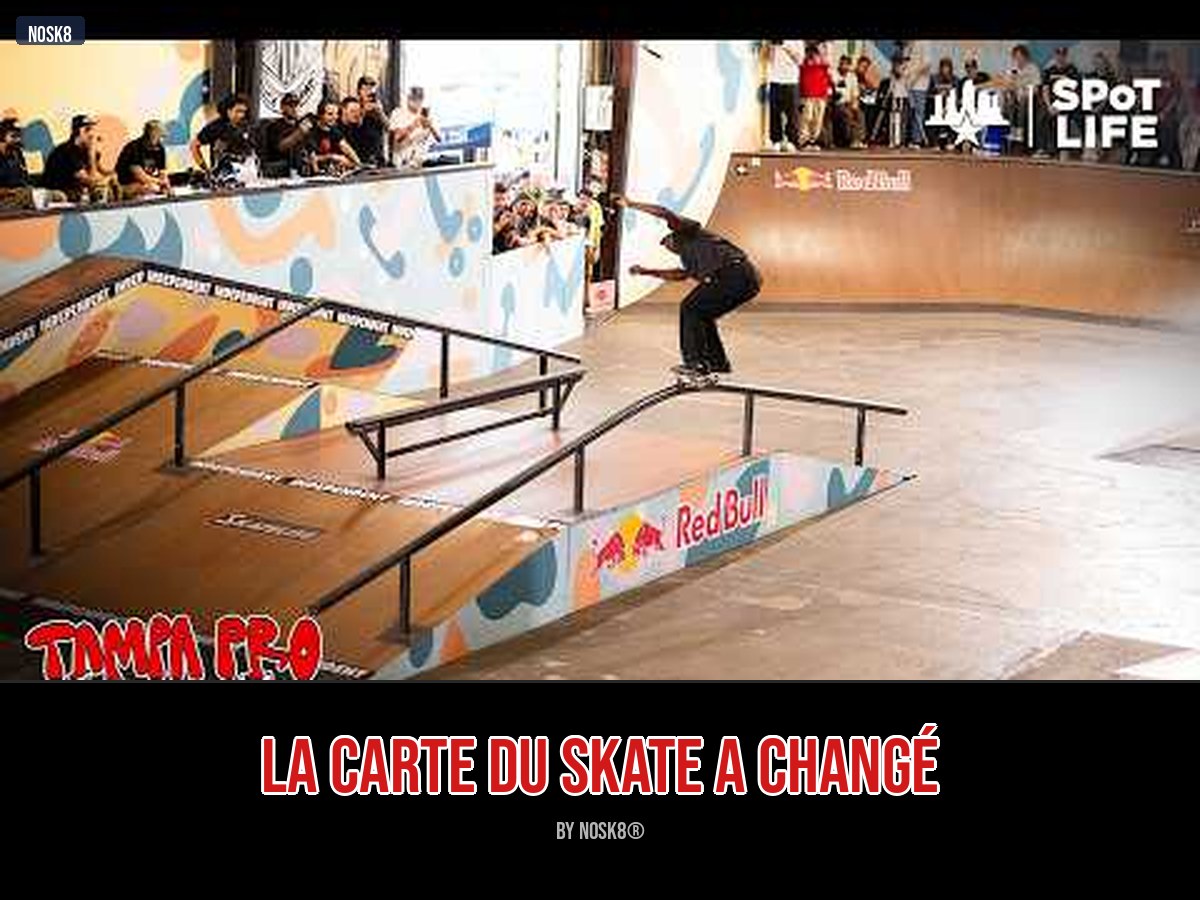
Tampa Pro isn’t just any contest. It’s the oldest street stop on the circuit, founded in 1995, back when Daewon Song and Rodney Mullen were inventing tech skateboarding in Californian parking lots. Thirty-two editions later, the Skatepark of Tampa remains the best barometer for the health of global skateboarding.
From April 10 to 12, 2026, 61 riders came to try their luck at the Tampa park. What emerged is a confirmation of what we’ve been seeing since the Paris Olympics: the map of street skateboarding has changed. For good.
Netsuke and the Japanese Wave
Kairi Netsuke posted the best score in Saturday’s qualifiers. Shizuoka, Japan. Zero Skateboards rider, wearing Asics. Twenty years old, no apparent pressure, fluid and readable skating. What’s striking about Netsuke is his serenity. No showboating, no excessive celebration — just clean tricks executed at the right moment.
He’s not alone. Since Yuto Horigome (double Olympic medalist), the Japanese scene has been producing international-caliber riders at a pace that’s alarming for the rest of the world. Ginwoo Onodera had just rewritten SLS history in Sydney less than a week ago. Netsuke confirms in Tampa that it wasn’t an accident. It’s a generation.
What unites these riders: an ultra-solid technical foundation forged from a young age in Japan’s indoor skateparks, an extraordinary contest discipline, and an ability to perform under pressure that recalls the approach of classic high-level athletes. Japanese skateboarding is no longer a curiosity — it’s the benchmark.
Gonzalez and South America in Ambush
If Japan dominates with its consistency, South America explodes with its creativity. Jhanka Gonzalez, Colombia, Creature Skateboards, Vans — achieved a double podium finish this weekend. Second in qualifiers. First in the Independent Best Trick. That’s the definition of a perfect weekend.
Behind him, Filipe Mota (Brazil) in third place in qualifiers, and Matias Dell Olio (Argentina) in fifth. Three South American countries in the top 5 of one of the circuit’s most selective contests. Ten years ago, that would have seemed inconceivable. Colombian, Brazilian, Argentinian skateboarding has structured itself in just a few years — skateparks, local sponsors, federal programs — and the return on investment is immediate.
Skateboarding has become a global sport in every sense of the word. The United States still has Ishod Wair (4th, solid, immense) but the historic American domination of Tampa Pro belongs to another era.
Giraud on the Best Trick Podium, but Europe Falls Behind
Aurélien Giraud is the only European to make it onto the podium this weekend. Third in the Independent Best Trick — a great performance, a clean trick on a technical obstacle, the signature of a rider who knows how to find his moment. But in the street qualifiers, he finished 24th out of 61. Not qualified for the semi-finals.
This isn’t a criticism. Giraud is one of the best riders of his generation, an Olympic medalist, the skipper of the French scene. But the level has risen everywhere, and Europe hasn’t yet produced the same density of contest riders as Asia or South America. A professional deck is no longer enough — the training system around the rider makes all the difference.
The question now is: will European skateboarding reorganize itself to produce circuit riders, or will it stick to its street / free skateboarding culture, which is its true identity? Both paths are valid. But if France wants medals at the Los Angeles 2028 Olympics, it’s going to have to speed up.
Tampa 2026 said what it had to say. The rest is up to the riders.