


Skateboard Deck Width 2026 — 7.75, 8.0, 8.5: What Your Shoe Size Really Wants
Everyone will tell you, « get an 8.0, it’s universal. » That’s wrong. The only real criteria are your feet — and your style. We’re breaking down the shoe size/deck chart that real shapers use.
⏱ Reading: 5 min
1. The Myth of the Universal 8.0
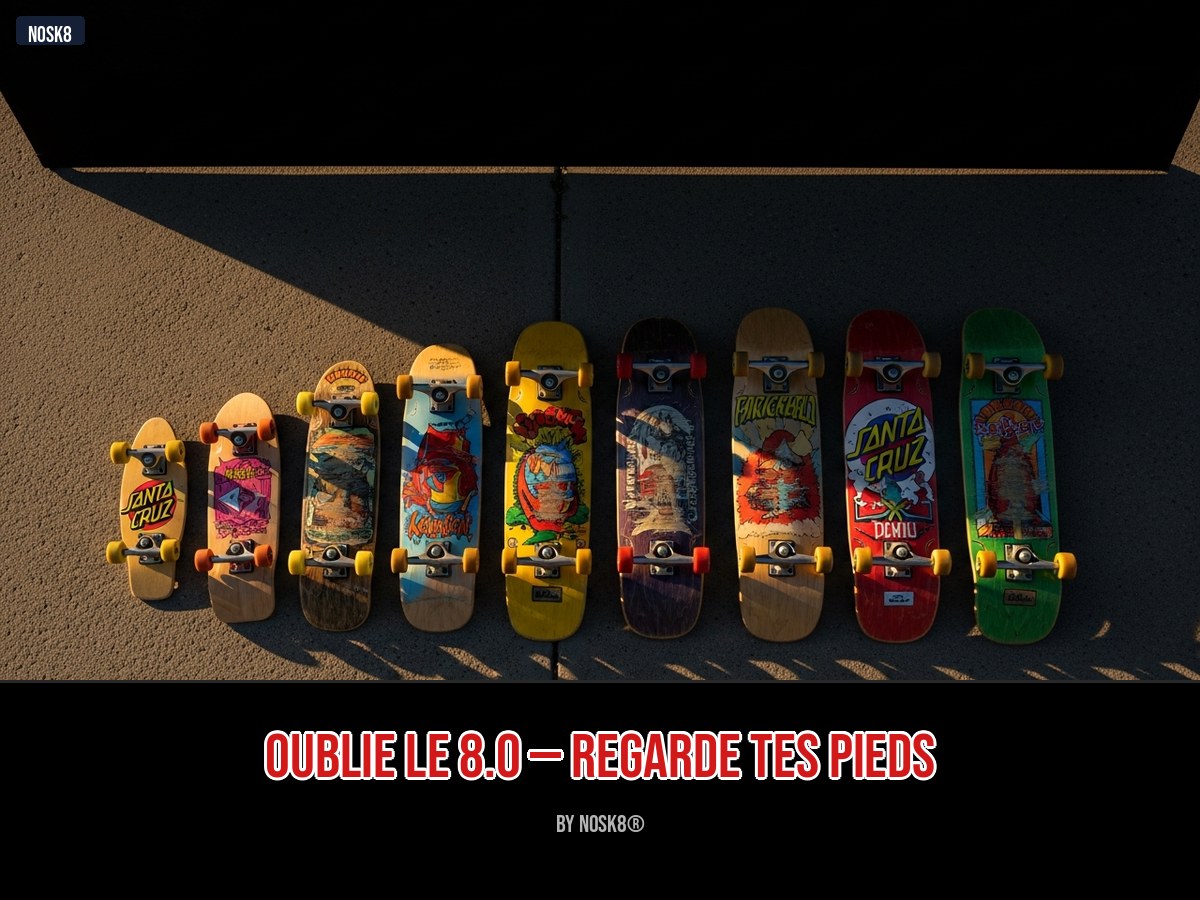
You walk into any skateboarding shop and ask the question. Automatic answer: « 8.0, it’s all-purpose. » It’s become the reflex answer because it saves the salesperson from asking the real question. What’s your shoe size? What’s your playground?
Pros illustrate the nuance well. Yuto Horigome rides an 8.125. Nyjah Huston hovers around 8.25. Tony Hawk in transition rarely goes below 8.5. Aurelien Giraud returned to an 8.0 after a period on an 8.25. No one has the same board, because no one has the same feet or the same terrain.
The 8.0 works for some skaters. For others, it’s a compromise that holds you back. You’ll feel the difference from the first week.
2. Your Shoe Size Dictates Your Width
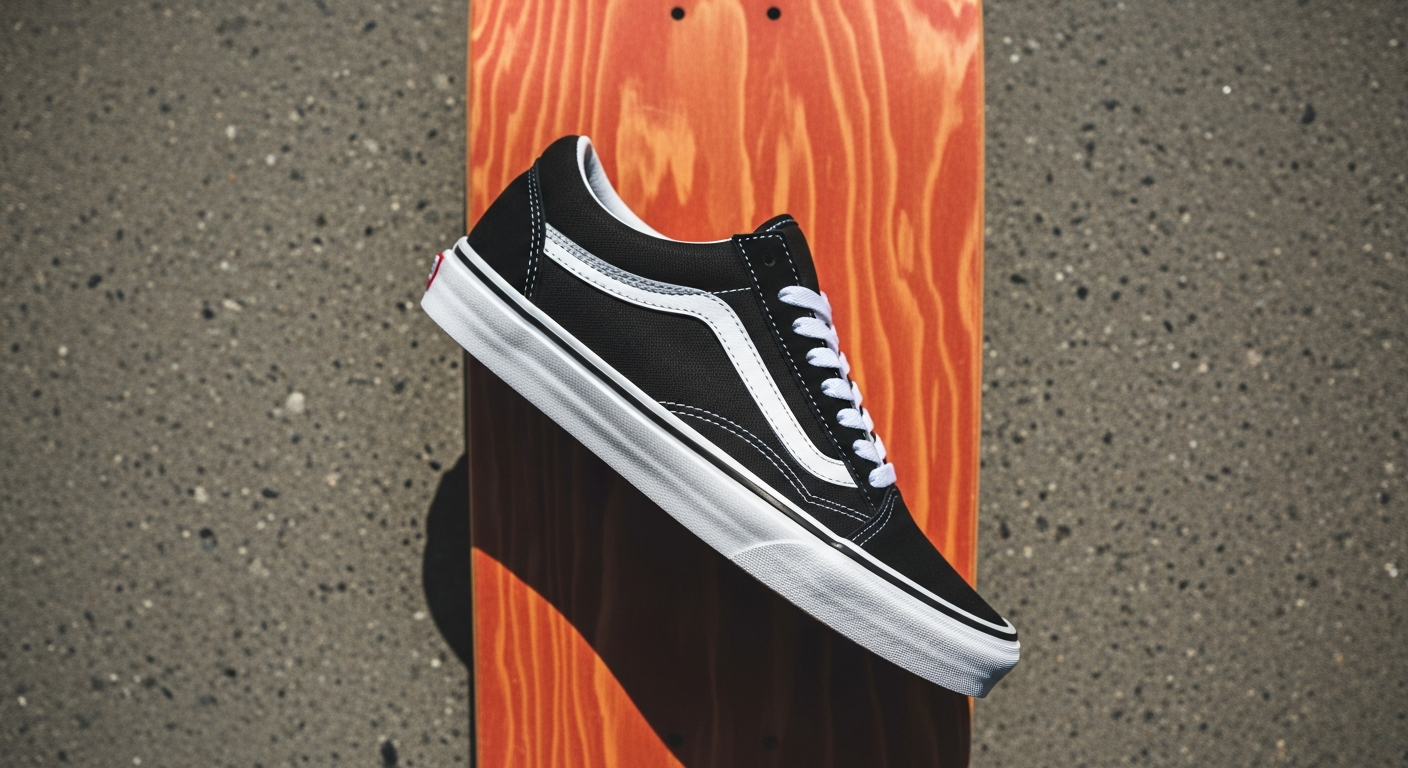
The rule is simple. Your foot should rest broadly on the board, with your toe and heel barely extending past the edge. Too wide, you lose flick. Too narrow, you twist your ankles on every landing.
| Shoe Size FR (EU) | Recommended Deck Width | Typical Profile |
|---|---|---|
| 36 — 39 | 7.5″ to 7.75″ | Teen, female skaters, pure technical |
| 40 — 42 | 7.75″ to 8.0″ | Versatile street, adult beginner |
| 42 — 44 | 8.0″ to 8.25″ | Average FR shoe size, 2026 standard |
| 44 — 46 | 8.25″ to 8.5″ | Large shoe sizes, transition, bowl |
| 46 and up | 8.5″ and up | Cruiser, vert, powerful riders |
You wear a 43 and skate a 7.75? You’ve definitely struggled with your manuals and flip landings. Switch to an 8.0 or 8.125, and comfort returns in two sessions. You wear a 40 and skate an 8.5? Your flick feels sluggish, your pop seems heavy. Go back to a 7.75 or 8.0.
3. Your Style Changes Everything
Beyond shoe size, look at where you skate. Three classic scenarios.
Pure technical street — you live for flips, manuals, 30 cm ledges. Stay between 7.75″ and 8.0″. You sacrifice a bit of stability to gain reactivity. This is the setup of a Daewon Song or a kickflip apprentice who wants to multiply attempts without fatigue.
Versatile street — you mix tricks and bowl, you also do curbs and big gaps. The 8.0″ to 8.25″ range covers 80% of situations. This is the 2026 sweet spot, and it’s probably your default choice.
Transition, bowl, vert — at Prado, Bercy bowl, or on a ramp, go straight for an 8.5″ or wider. Stability trumps quick rotation. Coupled with good Independent or Venture trucks, you’ll feel the difference from the first carve.
4. Concave, Length, Wheelbase: What We Forget
Width is just one parameter. Three other dimensions change the feel, but they get overlooked when you ask « 8.0 or 8.25? »
Concave — this is the transverse curve of the board. Low concave (Powell, Real) for comfort, medium for versatility (Element, Almost), high for maximum grip on flips (Baker, Deathwish). If your foot slips mid-session, the concave is probably too flat.
Wheelbase — the distance between the two sets of truck holes. Shorter, the faster you pivot (ideal for street). Longer, the more stable you are at speed (ideal for transition). Standard: 14″ for an 8.0″, 14.25″ for an 8.25″.
Overall length — often ignored, but 31.75″ and 32″ don’t feel the same for a tall rider. If you’re over 1m85, aim for 32″ minimum.
5. Two Boards Worth Your Money in 2026
We’ve selected two options in the most universal range (8.0″ to 8.25″). One for the beginner who wants to test without breaking the bank, one for the rider who wants a real seven-ply Canadian maple board.
ENUFF CLASSIC LOGO DECK 8.25″
Seven-ply maple, medium concave, clean finish. The ideal board to start with or to practice flips without wrecking your 75€ pro deck.
Fast delivery · 30-day returns
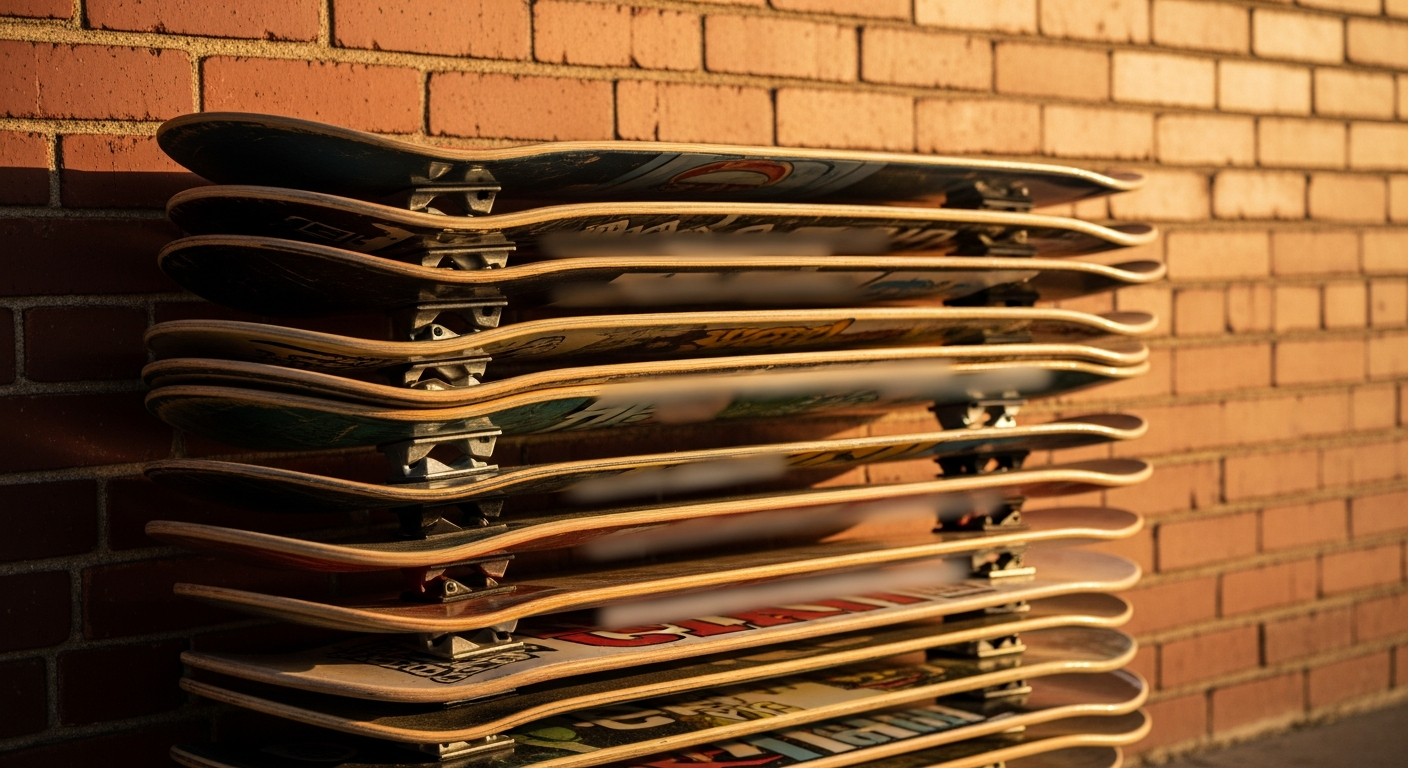
REAL TEAM CLASSIC OVAL 8.25″
The Real team’s signature board. Canadian maple, low concave, snappy pop that lasts. The standard to compare all other decks at this price.
Fast delivery · 30-day returns
Don’t forget the rest of your setup. A good deck deserves Mob or Jessup grip tape and skateboarding shoes suited to your style.
6. Quick FAQ
I’m a beginner, what width should I get?
Adult with shoe size 41-44: 8.0″ to 8.25″. You’ll be comfortable pushing, learning the ollie, and moving on to your first flips without changing boards.
Does 0.25 inches really make a difference?
Yes. 0.25″ represents 6.3 mm — you’ll feel the difference under your feet from the first session, especially when flicking and catching.
Is a wide board = more stable but slower?
Exactly. The wider the deck, the more inertia you have. You gain comfort at high speeds and in transition, but you lose rotation speed for aerial tricks.
Can I mix deck width and truck width?
Ideally, no. The truck hanger should be ±0.25″ the width of the deck. An 8.25″ requires 139 or 149 trucks (Indy), not 129s.
We read every comment